Walk into escrow on almost any pre-1978 fourplex in Koreatown, Mid-Wilshire, or Echo Park this year and you'll watch three separate government clocks argue with each other before the deal closes. One caps how fast the rent roll can grow. One decides whether the building is even legally sellable without a lien clouding title. One decides how much of the sale price the city keeps at the closing table. None of the three moved in isolation. All three moved in 2026. Most sellers are still pricing their building on last year's version of all of them.
That's the part worth sitting with before you set a list price. The rent formula that determines your income growth got cut in the same six-month window that the seismic retrofit deadline arrived and the transfer tax brackets shifted. A building that penciled out fine under 2024 assumptions can look meaningfully different under 2026 rules, and the gap shows up not in the list price but in what a buyer's underwriting model spits out once their lender starts asking questions.
The rent formula changed twice in six months
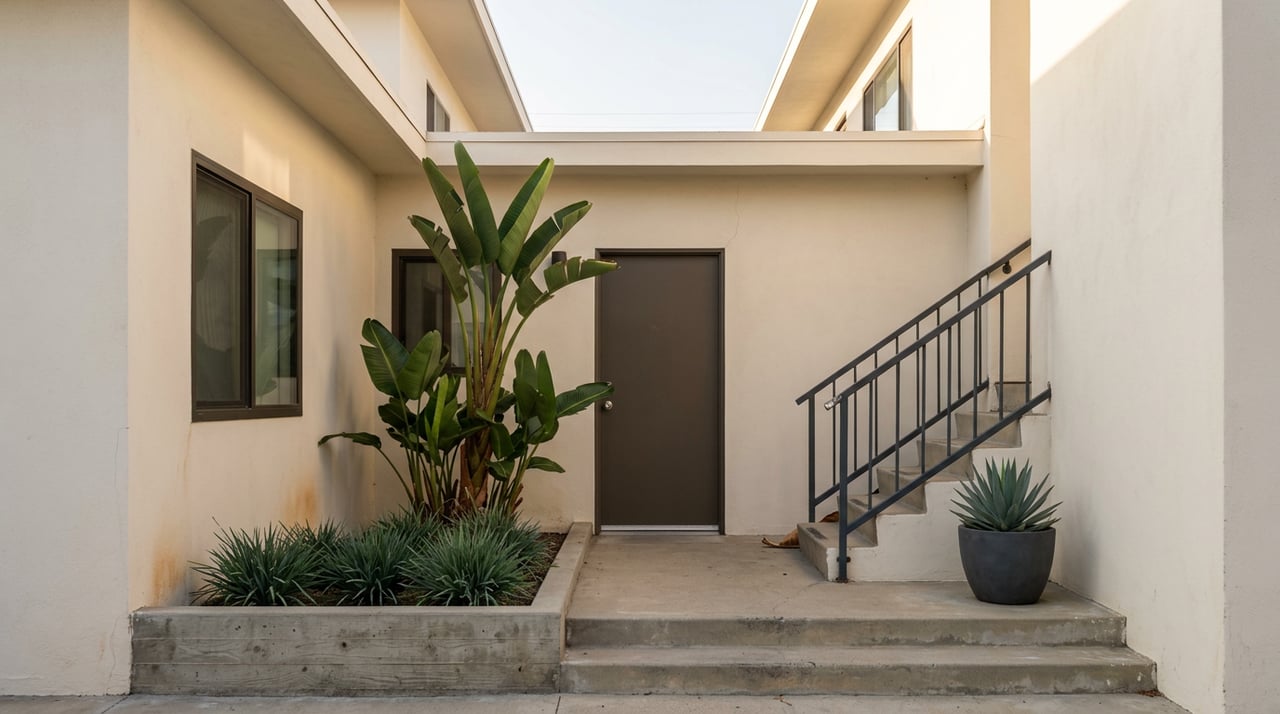
On December 12, 2025, the Los Angeles City Council voted 12-2 to cut the rent increase formula for buildings covered by the Rent Stabilization Ordinance. The RSO applies to residential buildings in the City of Los Angeles first built on or before October 1, 1978, which covers roughly 624,000 units across about 118,000 properties, concentrated in the older walk-up and courtyard-apartment stock that defines neighborhoods like Hollywood, Koreatown, Mid-Wilshire, Silver Lake, Echo Park, Palms, and Mar Vista.
The change landed in two steps. A temporary flat 3 percent cap covered increases noticed between June 1, 2025 and June 30, 2026, and that window has already closed. Since July 1, 2026, the formula has run on 90 percent of the Consumer Price Index, down from 100 percent of CPI under the old rule. On top of that, since February 2, 2026, landlords can no longer stack an extra percentage on top for utility costs, and the old rule allowing a 10 percent bump when an additional dependent moved into a unit is gone too.
Here's the shift in plain terms:
| Before 2026 | After the change | |
|---|---|---|
| Base formula | 100% of CPI | 90% of CPI (effective July 1, 2026) |
| Utility add-on | Allowed as extra percentage | Eliminated (Feb 2, 2026) |
| Additional dependent add-on | 10% allowed | Eliminated (Feb 2, 2026) |
| Interim cap | N/A | Flat 3% through June 30, 2026 |
None of this is a rounding error for a valuation. Appraisers and buyers price stabilized rental income on projected NOI growth, and NOI growth on an RSO building is a direct function of the annual increase formula. A formula that grows at 90 percent of CPI instead of 100 percent, with two add-ons removed entirely, produces a slower-growing income stream over a ten-year hold. That's the mechanism behind why the same rent roll that looked attractive to a buyer in 2024 needs a second look in 2026.
The soft-story deadline you can't sell around
Ordinance 183893 and its companion Ordinance 184081 created Los Angeles's mandatory soft-story retrofit program, targeting wood-frame buildings with two or more stories, tuck-under parking or other open ground-floor space, and construction that predates the 1978 building code. The city identified roughly 13,500 buildings that fit the criteria. Buildings with 16 or more units had to complete construction by April 2024. Everything smaller, the Priority 2 tier that includes most of the two- and three-story walk-ups changing hands right now, had to finish by April 2026.
That deadline has already passed. If your building falls in that Priority 2 tier and construction isn't done, you are not managing an upcoming compliance date anymore. You are already past it, and the consequences that follow a missed Order to Comply are active now, not hypothetical: escalating daily fines, a misdemeanor charge under the municipal code, and a property lien that can cloud title and block a sale or refinance outright. The city can also revoke the certificate of occupancy. California law separately requires landlords to disclose known earthquake hazards to tenants, so a building flagged as non-compliant carries a documented hazard that has to be disclosed as part of the transaction, not buried in a file.
There's a second layer here that's easy to miss. The rent-stabilization ordinance lets an owner recover part of a mandatory seismic retrofit through a capital-improvement rent surcharge, generally limited to about half the project cost and spread across 10 to 15 years. That recovery math was built around a rent base that used to grow faster. With the base formula now capped at 90 percent of CPI and the utility and dependent add-ons gone, the overall pace of rent growth on these buildings has slowed across the board. A buyer underwriting your fourplex in 2026 has to assume slower total income growth than a buyer would have assumed two years ago, which means more of any unfinished retrofit cost is likely to land on the seller's side of the negotiation than it would have before.
The transfer tax bracket that moved under mid-size sellers
Measure ULA, the City of Los Angeles transfer tax on higher-value real estate sales, updated its thresholds again in July 2026. Properties selling at $5.4 million or above but below $10.9 million are taxed at 4 percent, paid by the seller. Properties at $10.9 million or above are taxed at 5.5 percent. A $6 million sale carries $240,000 in ULA tax alone, before commission, mortgage payoff, or capital gains.
This matters more for RSO sellers than it looks at first glance, because it's exactly the price band where a mid-size courtyard building or 20-to-30-unit walk-up in Koreatown, Silver Lake, or Mid-Wilshire tends to trade. A seller who ran their net sheet last year, before the July 2026 threshold reset, is working from the wrong bracket boundary. Measure ULA does not apply to unincorporated Los Angeles County, so a building just outside the city line is exempt from it entirely, which is worth confirming through your parcel's jurisdiction before you assume the tax applies.
What escrow actually checks before it closes
None of these three tracks show up on a listing sheet. They show up in escrow, usually after an offer is already accepted, when a buyer's lender or title company starts pulling records. Before you list, run through this in order:
- Confirm your building's registration status with the Los Angeles Housing Department. The annual registration fee is $38.75 per unit, half of which can be passed to tenants as a $1.61 monthly surcharge. Non-registration or a lapsed fee is one of the most common reasons an escrow stalls.
- Pull your soft-story compliance status directly from LADBS. Whether your building's deadline was the original citywide date or the April 2026 Priority 2 cutoff, that date has already passed, so confirm exactly where your building stands rather than assuming it's still pending.
- Calculate the current rent ceiling for every unit under the new July 2026 formula, not the formula your rent roll was built on last year.
- Confirm your parcel's jurisdiction. A building inside the City of Los Angeles is subject to the RSO and Measure ULA. A building in unincorporated county territory falls under the county's own rent stabilization ordinance and is exempt from Measure ULA.
- If you're near the $5.4 million or $10.9 million Measure ULA thresholds, run the net sheet both ways before you set a price, since a small adjustment in asking price can move you across a bracket line.
The math that decides whether you sell now or hold
Put the three pieces together and the picture is straightforward. Rent growth on your building is now capped lower for the foreseeable future. If the building isn't retrofitted yet, the April 2026 deadline has already come and gone, and you're already exposed to fines and a title lien rather than facing a future risk. And if your sale price sits anywhere near the upper Measure ULA brackets, the tax you owe at closing changed this July too. None of these three facts moves your price in isolation. Together, they're the reason a building that looked like a clean hold in 2024 might make more sense as a 2026 sale, or vice versa, depending entirely on where your specific parcel sits on each of the three clocks.
Frequently asked questions
Does the new RSO rent formula apply to my building if it was built after 1978? Generally no. The Rent Stabilization Ordinance covers buildings first built on or before October 1, 1978, plus certain replacement units. Buildings built after that date typically fall under the state's Tenant Protection Act instead, which uses a different cap tied to regional CPI.
Do I have to finish the soft-story retrofit before I can sell? Not necessarily, but an unresolved Order to Comply, an unpaid fine, or a recorded lien can delay or block a title transfer. Confirm your building's exact status with LADBS before you list so there are no surprises once a buyer's title company runs its own search.
Does Measure ULA apply if my property is in unincorporated LA County? No. Measure ULA is a City of Los Angeles transfer tax and does not apply to sales in unincorporated county areas, which fall under the county's separate rent stabilization framework instead.
Will my buyer's lender care about my LAHD registration status? Yes. Lenders financing the purchase of an RSO-covered building routinely verify current registration and paid fees with LAHD during underwriting. A lapsed registration is a common, avoidable cause of escrow delay.
Selling or holding a rent-stabilized building in this environment isn't a decision you should make off a rent roll from last year. The Justin Tye Real Estate Group works with owners across Los Angeles's older multifamily stock to run the actual numbers, your building's registration status, retrofit compliance, and net proceeds under the current formula, before you commit to a price. Get a free home valuation to see where your building stands under the 2026 rules.