55,960 people live in National City, where the median age is 36.6 and the average individual income is $27,073. Data provided by the U.S. Census Bureau.
Total Population
Median Age
Population Density Population Density This is the number of people per square mile in a neighborhood.
Average individual Income
There's plenty to do around National City, including shopping, dining, nightlife, parks, and more. Data provided by Walk Score and Yelp.
Explore popular things to do in the area, including Great Happiness III, La Valentina Mexican Food, and San Diego Butcher Supply.
| Name | Category | Distance | Reviews |
Ratings by
Yelp
|
|---|---|---|---|---|
| Dining · $ | 0.34 miles | 1 review | 4/5 stars | |
| Dining | 0.39 miles | 0 reviews | 0/5 stars | |
| Dining | 0.45 miles | 0 reviews | 0/5 stars | |
| Dining · $ | 0.47 miles | 29 reviews | 4.7/5 stars | |
| Dining · $ | 0.67 miles | 418 reviews | 2.1/5 stars | |
| Dining | 0.93 miles | 2 reviews | 1/5 stars | |
| Shopping | 0.81 miles | 0 reviews | 0/5 stars | |
| Shopping | 0.98 miles | 1 review | 1/5 stars | |
| Active | 0.12 miles | 0 reviews | 0/5 stars | |
| Active | 0.83 miles | 0 reviews | 0/5 stars | |
| Nightlife | 0.6 miles | 1 review | 5/5 stars | |
| Beauty | 0.28 miles | 0 reviews | 0/5 stars | |
| Beauty | 0.42 miles | 9 reviews | 2.8/5 stars | |
| Beauty | 0.59 miles | 1 review | 5/5 stars | |
| Beauty | 0.79 miles | 77 reviews | 2.4/5 stars | |
| Beauty | 0.85 miles | 47 reviews | 3.4/5 stars | |
| Beauty | 0.96 miles | 8 reviews | 5/5 stars | |
| Beauty | 0.98 miles | 65 reviews | 4.9/5 stars | |
| Beauty | 1.04 miles | 37 reviews | 3.6/5 stars | |
| Beauty | 1.04 miles | 16 reviews | 3.9/5 stars | |
| Beauty | 1.15 miles | 1 review | 5/5 stars | |
| Beauty | 1.25 miles | 1 review | 5/5 stars | |
| Beauty | 1.3 miles | 0 reviews | 0/5 stars | |
|
|
||||
|
|
||||
|
|
||||
|
|
||||
|
|
||||
|
|
National City has 17,706 households, with an average household size of 3.09. Data provided by the U.S. Census Bureau. Here’s what the people living in National City do for work — and how long it takes them to get there. Data provided by the U.S. Census Bureau. 55,960 people call National City home. The population density is 7,616 and the largest age group is Data provided by the U.S. Census Bureau.
Total Population
Population Density Population Density This is the number of people per square mile in a neighborhood.
Median Age
Men vs Women
Population by Age Group
0-9 Years
10-17 Years
18-24 Years
25-64 Years
65-74 Years
75+ Years
Education Level
Total Households
Average Household Size
Average individual Income
Households with Children
With Children:
Without Children:
Marital Status
Blue vs White Collar Workers
Blue Collar:
White Collar:
National City is the second-oldest city in San Diego County, a 7.3-square-mile municipality on the east shore of San Diego Bay between the City of San Diego and Chula Vista. It incorporated on September 17, 1887, on land that Frank Kimball and his brothers bought in 1868 as the 26,000-acre El Rancho de la Nacion, according to the city's historic sites page. That founding era still shows in the housing: Victorian row houses and cottages near the old downtown, a mid-century grid of small detached homes across the center of the city, condominiums and apartment buildings along the corridors, and a working bayfront of Port tidelands and Navy piers where no one lives at all.
For a buyer comparing National City real estate, the numbers are more useful when they are split. The state's provisional January 1, 2026 estimate counts 18,524 housing units in the city, and only 7,765 of them, about 42 percent, are single-family detached houses; 6,989 units sit in buildings of five or more. In Redfin's report for August 2026, the citywide median sale price across all home types was $735,513, down 0.4 percent from a year earlier, and the median home went pending after 13 days. The exact figures, their sources and their limits are in the market section below. A citywide median is orientation, not a value for a particular bungalow, condominium or fourplex.
This guide covers the incorporated city only. Lincoln Acres, a county-governed island inside the city's outer boundary, and the San Diego neighborhoods along the northern edge share the 91950 mailing address without sharing National City's permits, taxes or services. Use the listings above for current inventory, then bring the comparison down to a specific street, parcel and jurisdiction before you price anything.
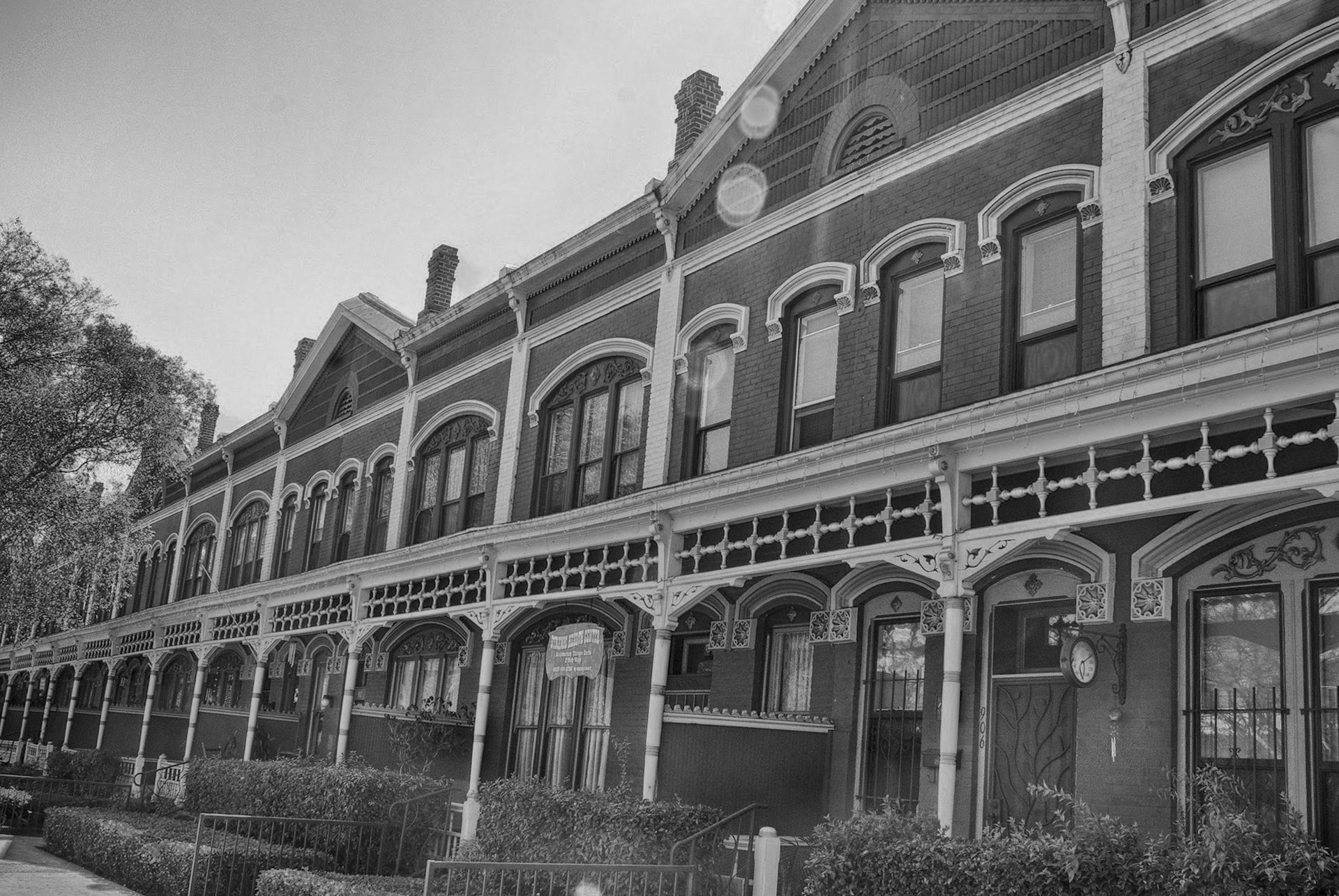
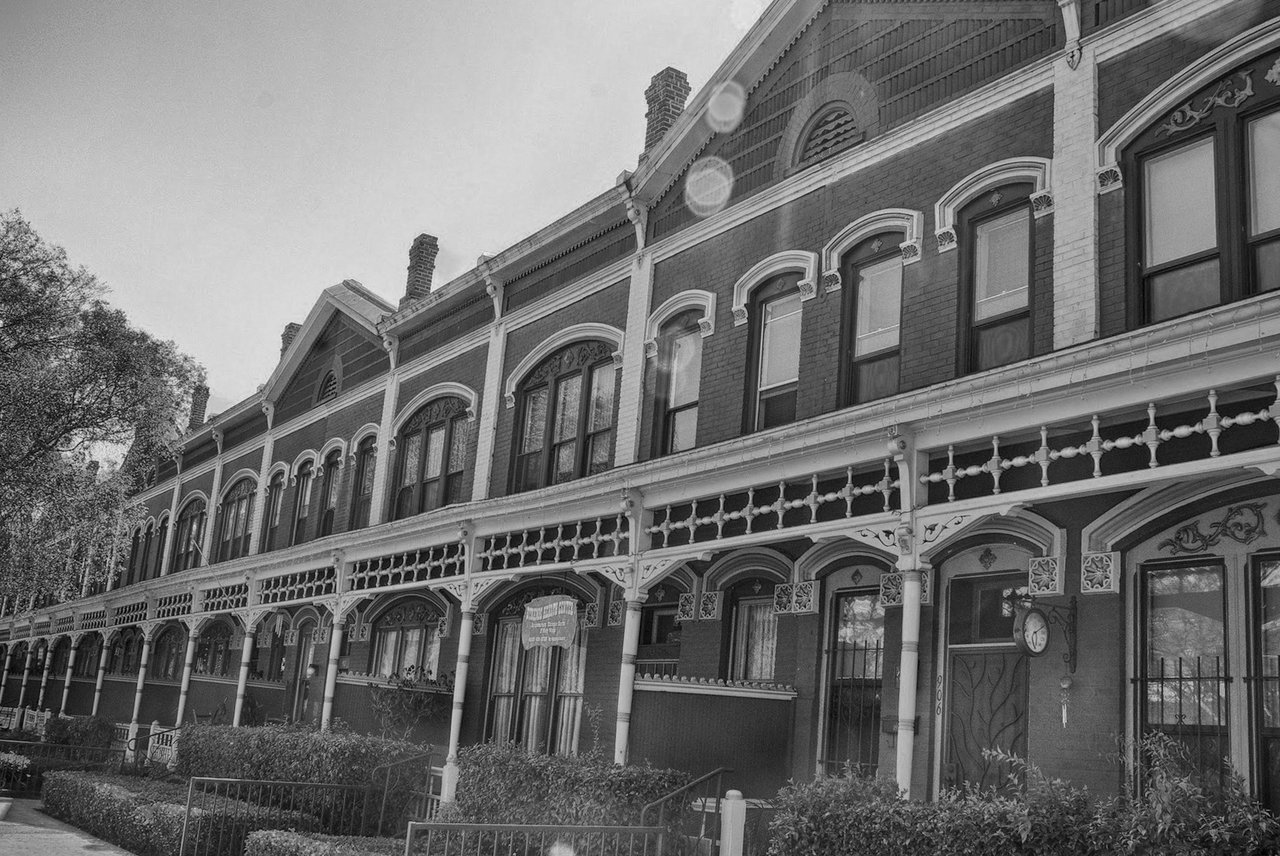
Brick Row on A Avenue between 9th and 10th Streets, photographed in black and white in September 2014. Frank Kimball built the ten row houses in 1887 for Santa Fe Railroad executives; each unit is privately owned today.
01 / The directory
National City does not market itself as a set of named villages. The useful way to organize a search is by the areas the city's own plans and parks define: Old Town and the Westside below National City Boulevard, the downtown blocks around Kimball Park and the 8th Street trolley station, the residential grid east of Highland Avenue, the hills toward Paradise Valley and Plaza Bonita, the Lincoln Acres county island, and the bayfront. The names below are orientation points drawn from official city, state and Port documents, not labels that settle school assignment, zoning or value.
Old Town is the oldest residential district in the city, lying west of National City Boulevard toward the rail line and the bay. The city's 2021-2029 Housing Element notes that adopted specific plans guide the downtown district and the westside "Old Town" area, and that the Westside Specific Plan's RS-4 zone provides for single-family attached and detached homes on lots as small as 2,500 square feet, one dwelling per full 2,500 square feet of lot area. That is the smallest detached-lot pattern in the city, and it explains why a Westside cottage can sit closer to its neighbor than anything east of Highland Avenue.
The Westside also carries an industrial history. For decades, houses and small industrial businesses shared the same blocks, and the specific plan was written to reduce those incompatible uses over time. When you tour here, ask what stood on the parcel and beside it, request any environmental reports in the disclosure package, and treat a recently cleaned or converted site as a document question rather than a curiosity. The payoff for that diligence is real: Paradise Creek Park at Coolidge Avenue and West 19th Street and the Paradise Creek Educational Park behind Kimball Elementary, completed in 2017, put a restored creek and native planting in the middle of the district, and the 24th Street trolley station is a short distance west.
Downtown National City runs along National City Boulevard and East 8th Street, with Kimball Park at 12th Street and D Avenue as its green center and the 8th Street trolley station at its western edge. The 2005 Downtown Specific Plan covers about 135 acres and was written to encourage mixed-use housing over retail, with residential densities of 40 to 60 units per acre and buildings of 10 to 12 stories in the core. That is why a downtown search returns condominiums in mid-rise buildings alongside century-old houses a few blocks away.
Heritage Square, at 909 A Avenue, holds Brick Row: ten row houses designed by San Diego architect R. C. Ball and built by Frank Kimball in 1887 for $30,000 to house Santa Fe Railroad executives. The city's historic sites page records that each of the ten units is privately owned, with a protective covenant on the facade, and that the building is on the National Register of Historic Places. Nearby, St. Matthews Episcopal Church at 521 East 8th Street is another of the city's four National Register buildings. For an owner of a designated property, the same page explains that the city can add properties to its List of Historical Sites and that the owner may then request a Mills Act contract, which reduces property taxes in exchange for ongoing maintenance and improvements. If a listing mentions a Mills Act contract, read the contract, its term and its obligations before you value the tax saving.
East of National City Boulevard and on both sides of Highland Avenue, the city is a grid of detached houses, many built in the decades after the Second World War, with apartment buildings and condominiums concentrated along the wider streets. The neighborhood names most buyers use here come from the schools and parks: Olivewood around Olivewood Elementary at 2505 F Avenue, Las Palmas around Las Palmas Park at Newell and East 22nd Street, and the blocks near Sweetwater High School at 2900 Highland Avenue. Butterfly Park at Palm Avenue and East 22nd Street and the Las Palmas pool are the practical anchors.
A detached house here is usually the most straightforward purchase in the city, and also the one where condition varies most. Compare original layouts with expanded or converted ones, check the permit history for additions and garage conversions, and measure the usable yard rather than trusting the lot size. On a corner or a corridor block, spend time at the property at the hour you will actually be home; Highland Avenue and Plaza Boulevard carry the city's commercial traffic.
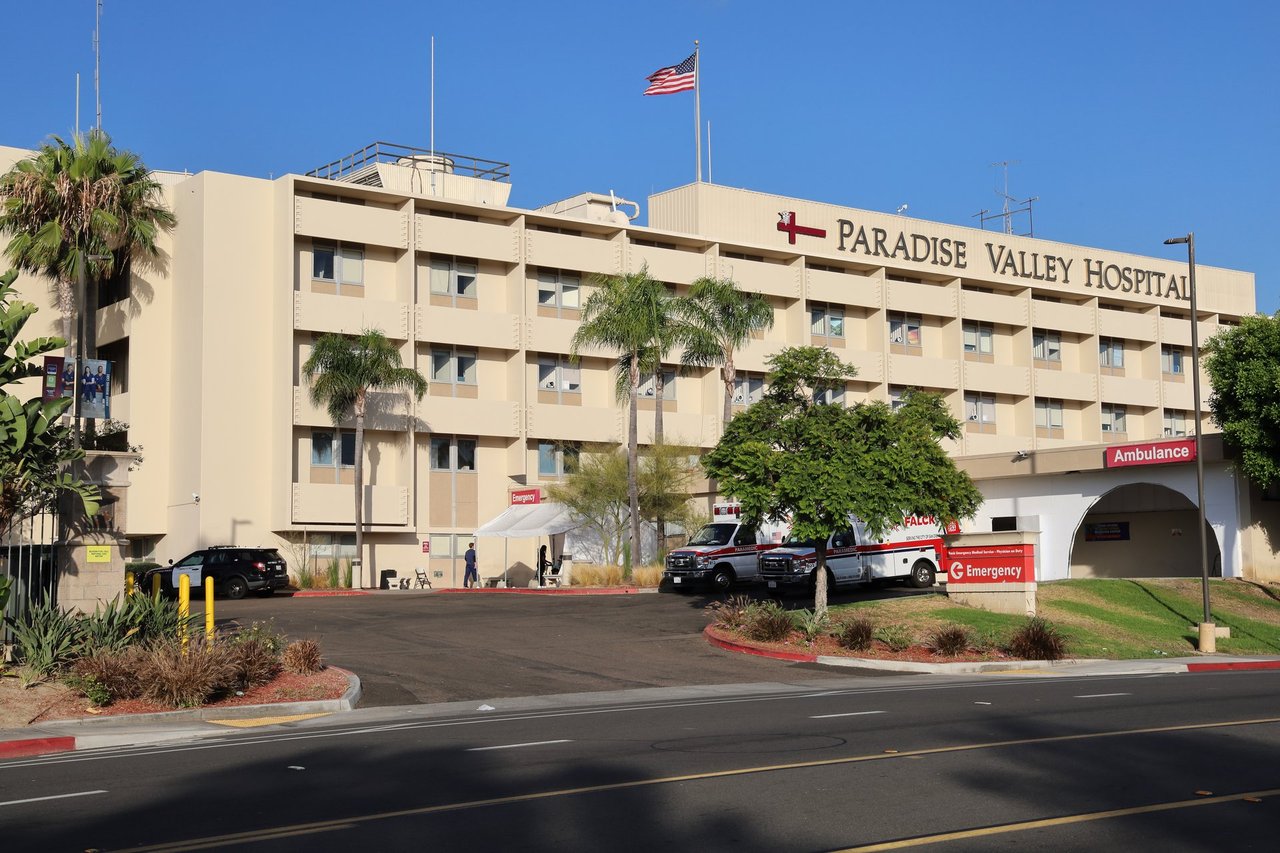
The northeastern part of the city rises toward Interstate 805 and the Paradise Valley area, where Ralph Granger built his estate in the 1890s. Granger Music Hall, the Irving Gill recital hall he commissioned, was moved to save it and now stands at 1615 East 4th Street, a few blocks from El Toyon Park; the city's parks page lists El Toyon's recreation center, multi-use sports facility and separate small-dog and large-dog park areas at 2005 East 4th Street. Paradise Valley Hospital on Euclid Avenue anchors the area, and the hills around it hold the detached homes with the best chance of a view toward the bay.
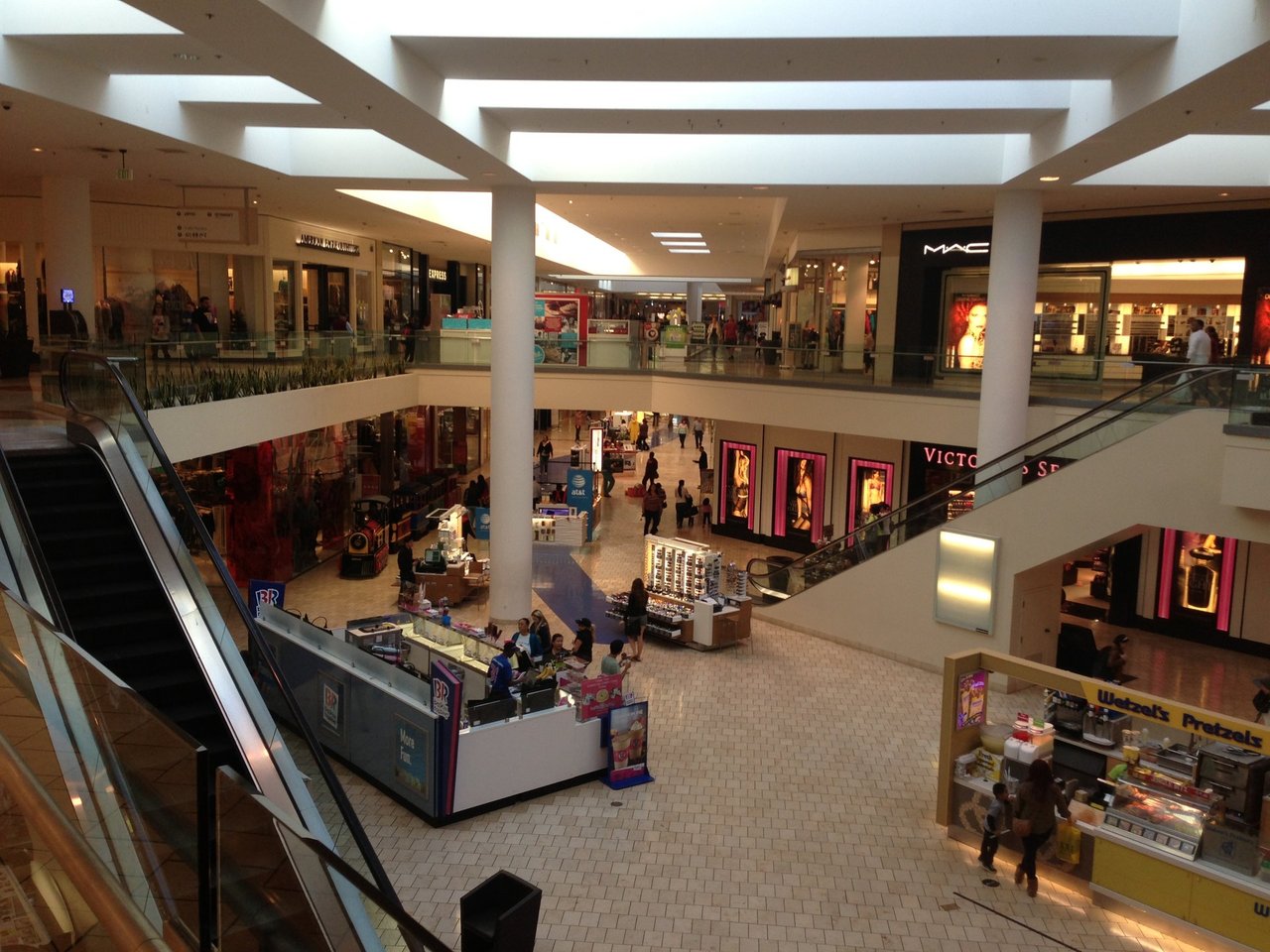
Farther south and east, the land drops toward the Sweetwater River valley and Plaza Bonita, the enclosed mall at 3030 Plaza Bonita Road that opened in 1981. Hillside lots here need a slope, drainage and retaining-wall check as much as a room count; a view from the listing photographs should be confirmed from the yard, and a quiet street near the freeway should be confirmed at rush hour.
Lincoln Acres is an unincorporated San Diego County community that sits entirely inside National City's outer boundary. The U.S. Census Bureau's TIGERweb boundary for the city draws it as a hole in the municipal polygon, and the city's Housing Element lists it among the city's neighbors. For a buyer that means county permits, county code enforcement and county services on a lot whose mailing address still reads National City, CA 91950. Lincoln Acres Elementary at 2200 South Lanoitan Avenue belongs to the National School District, so the school side is unchanged; the jurisdiction side is not. Confirm which government you are dealing with before you assume anything about a permit, a tax bill or a service.
The state's January 1, 2026 E-5 estimate counts 1,741 single-family attached units, 1,601 units in buildings of two to four units, 6,989 units in buildings of five or more, and 428 mobile homes in National City. Attached ownership concentrates downtown, along the corridors and in planned complexes such as the ones on Via Las Palmas. For a condominium, read the association's budget, reserves, insurance and repair responsibilities for the exact unit, confirm the parking assignment, and compare the full monthly payment rather than the list price. A duplex to fourplex is a way to live in the city with rental income beside you; underwrite it as an investment, with current leases, actual rents and the condition of shared systems in hand, and remember that an occupied unit does not deliver vacant. Mobile-home ownership is different again, because the home and the land can have separate owners; confirm the park's space rent, lease and management before treating a listing as comparable to a detached house.
West of Interstate 5 the city is Port of San Diego tidelands and Navy waterfront, not a residential neighborhood, and the changes planned there matter to the rest of the city rather than to housing supply. The Port's National City Bayfront page describes 273 acres of waterfront land and 167 acres of water, including the marine terminal, Pepper Park, Pier 32 Marina and the Aquatic Center; the daily life section below covers the Balanced Plan.
New housing in the city comes mostly from infill: downtown mixed-use buildings, corridor apartments, accessory units and the city's density-bonus program. The city's General Plan page records the 2024 Focused General Plan Update, initiated in March 2020 with a horizon year of 2050, the Housing Element adopted August 3, 2021, an updated Land Use Element and Zoning Map, a Transit Oriented Development Overlay and a Floor Area Ratio Density Bonus Program. The Housing Element carries a regional housing need of 5,437 units for 2021 through 2029, nearly three times the roughly 1,863 units of the previous cycle. Ask the city for the entitlement status of any project a listing mentions; a rendering is not a completion date, a price sheet or proof of the parking that will be delivered.
Which part of National City fits your budget, commute and school needs? Ask us to narrow the search.
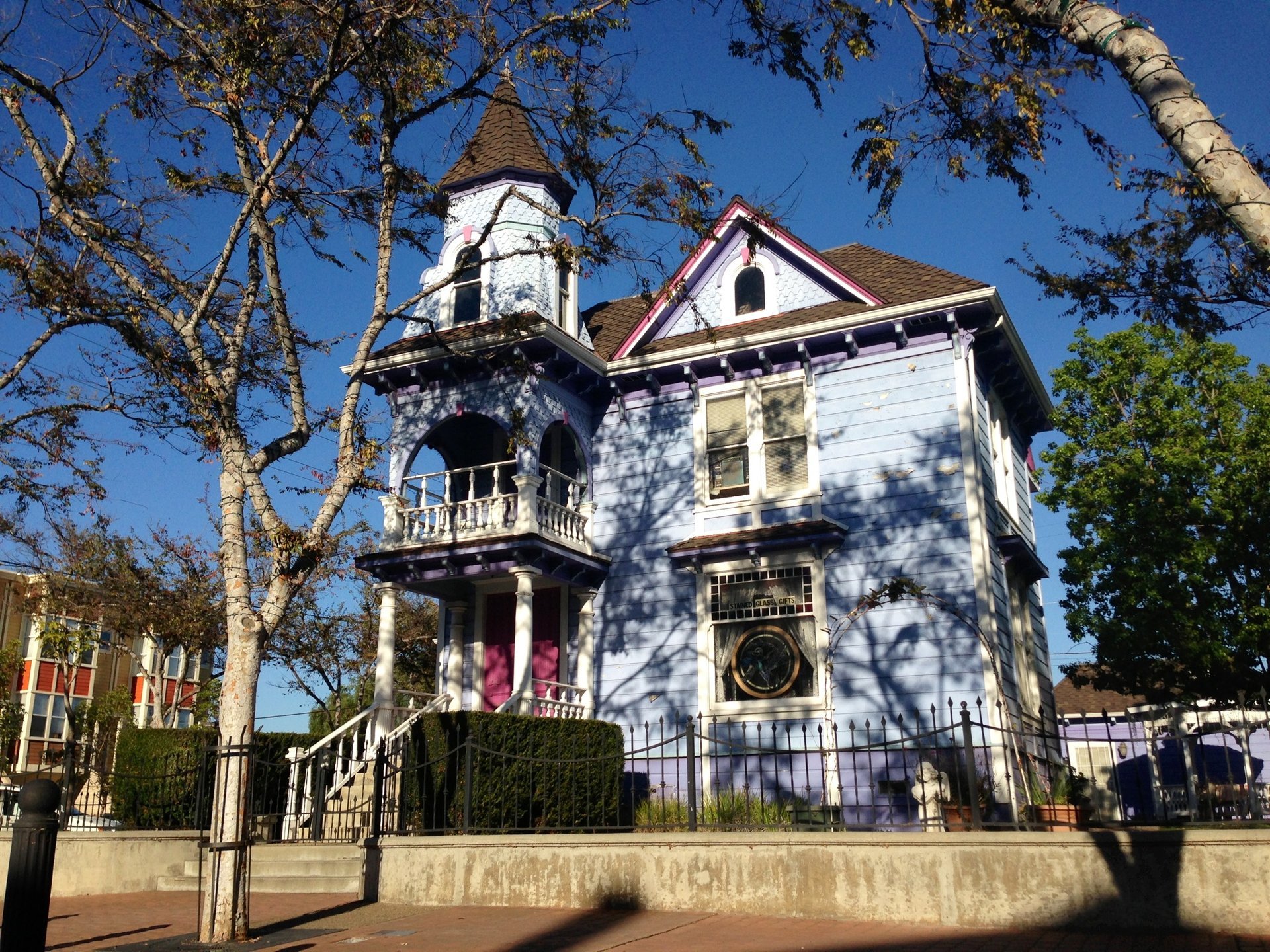
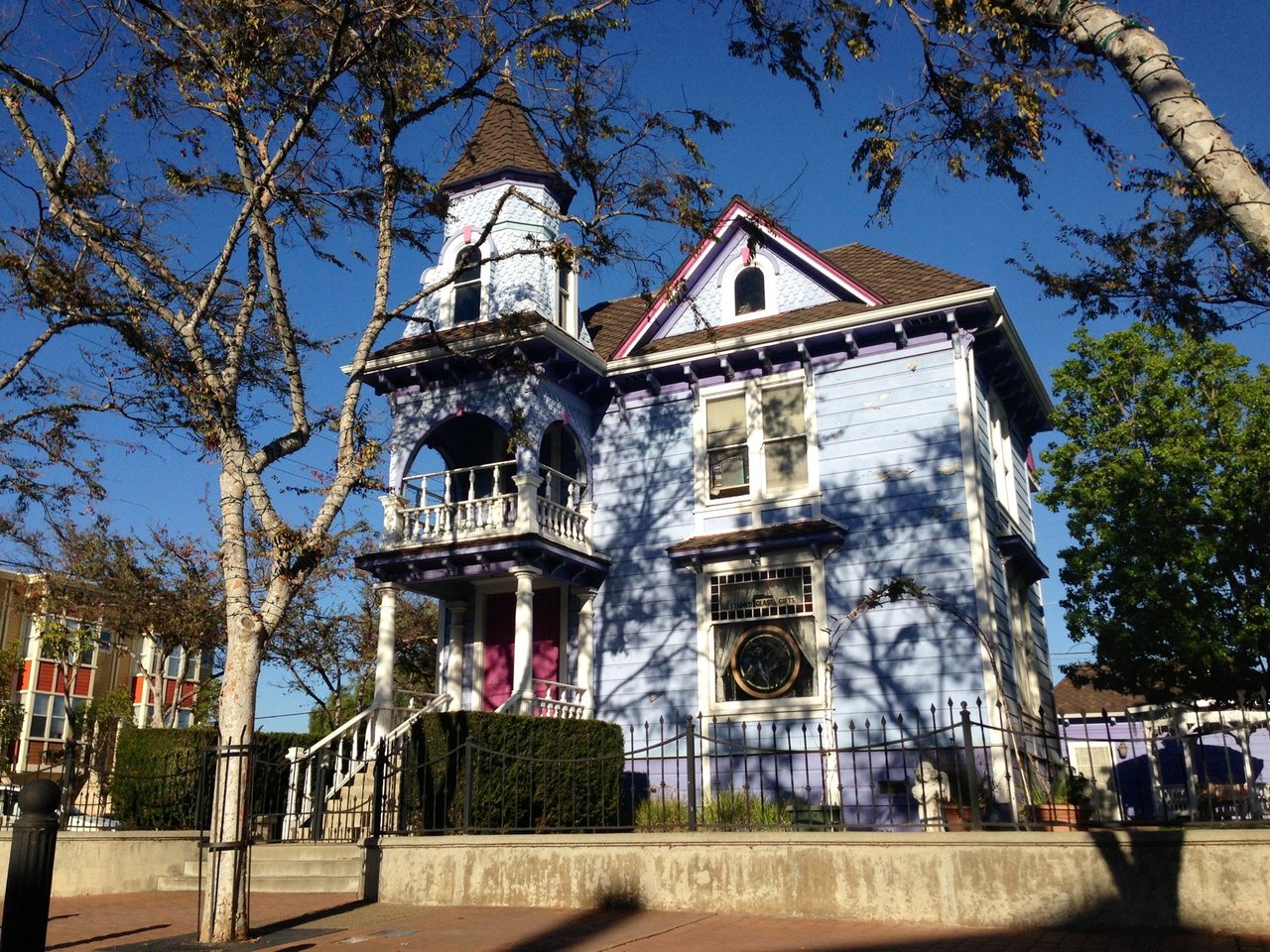
A Victorian-era house in National City's historic district, photographed in October 2013. The city's Mills Act program can reduce property taxes on listed historic properties in exchange for maintenance commitments.
02 / Prices
In Redfin's all-home-type report for August 2026, the median sale price in National City was $735,513, down 0.4 percent from August 2025; 30 homes sold in the month, the same count as a year earlier, and the median home went pending after 13 days on the market compared with 28 days the year before. The source report was checked September 14, 2026. It blends detached houses, condominiums and small income properties, and it is not a valuation of any specific property.
The Greater San Diego Association of REALTORS separates the segments for ZIP 91950 in its August 2026 local market update, current as of September 5, 2026 and drawn from the San Diego MLS. Detached homes closed at a year-to-date median of $750,000 through August 2026, up 1.2 percent from $741,000 a year earlier, with 49 closings against 71 in the same period of 2025 and a median 20 days on market until sale, down from 29. In August alone only six detached homes closed, at a median of $787,500 and 103.6 percent of original list price, so the association's own warning applies: percentage changes on samples this small can look extreme. Attached homes closed at a year-to-date median of $510,000, up 0.5 percent, with 26 closings against 18 and a median 44 days on market. Inventory at the end of August was 25 detached and 11 attached homes, about 3.5 months of supply in each segment. The ZIP code includes Lincoln Acres and some addresses outside the city limits, which is why the boundary matters as much as the figure.
Ownership costs differ from the city next door in two ways worth knowing before you compare. National City's combined sales and use tax rate is 8.75 percent, the same as Chula Vista's and one point above the 7.75 percent charged in the City of San Diego and Coronado, according to the California Department of Tax and Fee Administration rate table effective July 1, 2026. Property taxes start from the statewide one percent of assessed value plus voter-approved debt, and any special tax is a parcel question, not a city question: check the current bill and the county's Mello-Roos information page for the exact parcel rather than assuming an older city has none.
Housing choice | Typical comparison | Association review | Other carrying costs | What to compare closely |
|---|---|---|---|---|
Old Town and Westside small-lot detached | Original cottage versus expanded, converted or rebuilt home on a 2,500-square-foot lot pattern | Usually none; confirm for the parcel | Property tax, insurance, systems, exterior maintenance | Permit history, environmental disclosures for former industrial uses, parking, alley and street exposure |
Mid-century detached on the central grid | Original layout versus additions, garage conversions and second units | Usually none; confirm for the parcel | Property tax, insurance, roof, electrical and plumbing age | Usable yard, corridor traffic, school assignment for the exact address |
Hillside detached toward Paradise Valley and Plaza Bonita | View and slope lot versus level lot on the same street | Occasional; read the documents where one exists | Slope, drainage and retaining-wall maintenance; insurance | Freeway noise at rush hour, actual view from the yard, geotechnical history |
Downtown and corridor condominiums and townhomes | Mid-rise unit versus small-complex townhome; floor, orientation and parking | Always; budget, reserves, insurance and repair responsibilities | Dues, special assessments, parking and storage fees | Assigned parking, noise from the boulevard and rail line, delivery and trash access |
Duplex to fourplex | Owner-occupied unit plus rental income | None; local and county tenancy rules apply | Vacancy, shared systems, capital repairs | Current leases, actual rents, condition of common systems, separate metering |
Mobile home in a park | Home ownership with leased space versus owning the land | Park rules and management instead of an association | Space rent, park fees, registration | Lease term, rent history, financing limits, park ownership |
Prices in a city with fewer than a dozen detached closings a month move with individual sales. A permitted second unit, a level usable yard or a documented remodel can separate two houses on the same block by more than the citywide year-over-year change. We would rather explain the difference between three relevant closings than hand you an average that blends a downtown condominium, a Westside cottage and a hillside house.
Want the actual comparable sales for a National City street or complex? Ask us to send them.
03 / Schools
Two districts serve the city. The National School District educates about 4,000 students from preschool through sixth grade in ten elementary schools inside the city, including Central at 933 E Avenue, El Toyon at 2000 East Division Street, Ira Harbison at 3235 East 8th Street, John A. Otis at 621 East 18th Street, Kimball at 302 West 18th Street, Las Palmas at 1900 East 18th Street, Lincoln Acres at 2200 South Lanoitan Avenue, Olivewood at 2505 F Avenue, Palmer Way at 2900 Palmer Street and Rancho de la Nacion at 1830 East Division Street. Its school locator returns the assigned campus for a full street address.
From seventh grade the Sweetwater Union High School District takes over. Its National City campuses are National City Middle School at 1701 D Avenue, Granger Junior High School at 2101 Granger Avenue, and Sweetwater High School at 2900 Highland Avenue. The district's enrollment page explains that office staff refer to school boundary maps for an address, and its Find My School tool does the same online. Charter, magnet and intra-district transfer options are separate applications with their own timelines.
The nearby-schools panel above this guide lists campuses by distance, including schools in San Diego and Chula Vista. Distance is not assignment. Boundaries can run down the middle of a street, and Lincoln Acres addresses sit in the same elementary district as the city around them while answering to the county for everything else. Verify the assigned school for the exact address, grade and school year with each district before a purchase depends on it, and ask about programs and objective criteria rather than a portal's rating number.
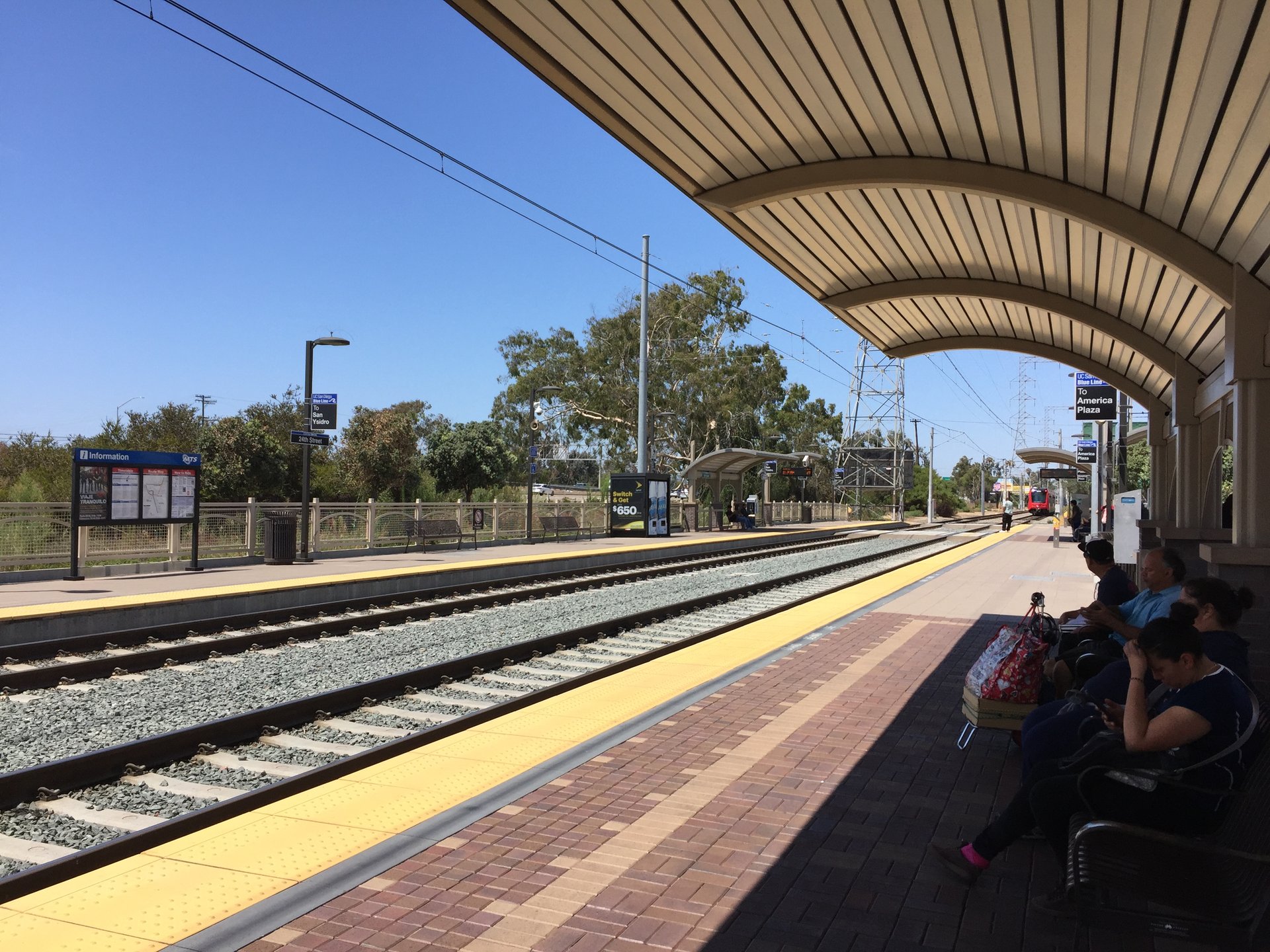
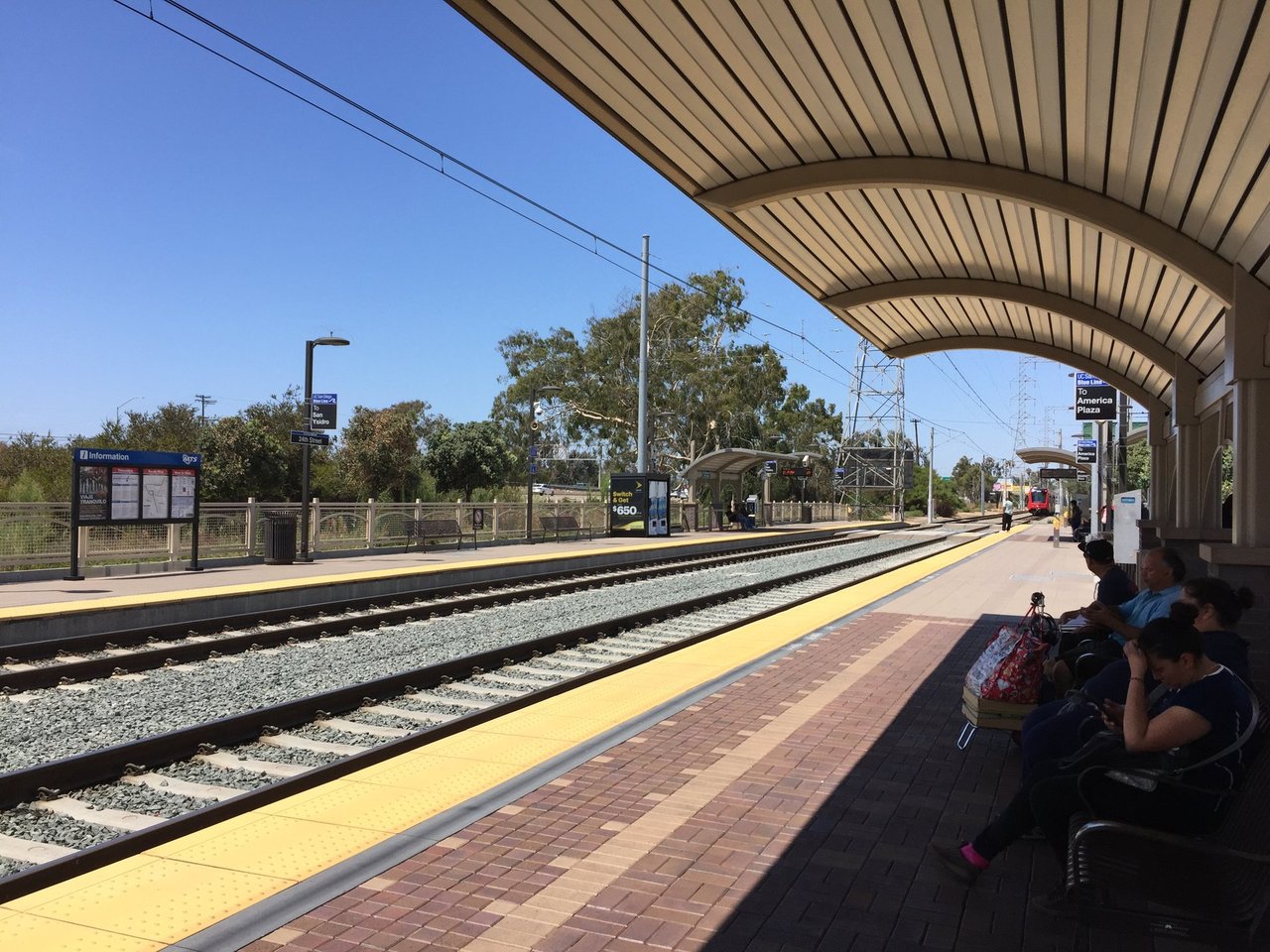
The 24th Street trolley station at 506 West 22nd Street, photographed in August 2019. The UC San Diego Blue Line stop has 156 parking spaces reserved for transit riders.
04 / Commute
National City is one of the few South Bay cities where a car-free commute is realistic for some addresses. The UC San Diego Blue Line stops twice inside the city: 8th Street station at 555 West 8th Street, with 123 parking spaces, and 24th Street station at 506 West 22nd Street, with 156 spaces, according to the MTS station parking page, which limits both lots to transit riders and a 24-hour maximum. The line runs north toward downtown San Diego and south toward Chula Vista and the border. Whether it works for you depends on the last part of the trip: walk from the homes you are considering to the platform at the hour you would use it, and check the connecting bus routes for your destination. Farther south on the same Blue Line corridor, the Imperial Beach city guide covers the beach city reached by bus from the Iris Avenue Transit Center, with its own pier, estuary edge and market window.
By road, the city's About page points to Interstates 5 and 805 and State Route 54. I-5 separates the bayfront from the residential city, I-805 runs along the eastern hills, and SR-54 follows the Sweetwater River on the southern edge. A Westside or downtown address favors I-5 and the trolley; an El Toyon or Paradise Valley address favors I-805. No travel time is promised here: record your actual destination, arrival time and parking, then test the complete trip from the specific home at the specific hour.
The Navy is the largest fact of the western commute. The Housing Element, written in 2021, recorded the Navy's projection that roughly 10,000 additional personnel would be working within National City as more personnel are stationed at Naval Base San Diego. For a household with a base commute, the gate you use and the shift you work matter more than the city's median drive time, so compare specific streets against the specific gate. For cyclists, the Port's bayfront page notes that the city's Bayshore Bikeway project along the waterfront is anticipated to begin in fall 2026 with a $2 million Port contribution; check the current status before counting on it.
05 / Daily life
The city describes 87.2 acres of parkland, six parks and four community centers, and an Olympic-sized pool at Las Palmas. Kimball Park at 12th Street and D Avenue is the civic green, with the skate park at 16th and B Avenue, the Martin Luther King Jr. Community Center at 140 East 12th Street and the Kimball Senior Center at 1221 D Avenue beside it. El Toyon Park at 2005 East 4th Street has the recreation center, sports facility and dog park, and the parks page notes that inflatable jumps are allowed only at Las Palmas Park. Park hours are dawn to dusk.
The bayfront is the part of the city that is changing fastest. The Port of San Diego's National City Balanced Plan expands Pepper Park by 2.5 acres, from 5.19 to 7.69 acres, realigns Marina Way as a buffer between recreation and maritime uses, and adds public access corridors to the water. The Port's board approved the plan on November 16, 2022, the California Coastal Commission certified the Port Master Plan Amendment in December 2025 according to the Port's December 11, 2025 announcement, and the board accepted that certification on February 17, 2026. The first phase of Pepper Park improvements, $7.36 million, was completed in spring 2026. Pier 32 Marina, with 250 slips, opened in 2008; a later phase contemplates up to two hotels. None of it adds housing, but a bayfront park, marina and bikeway within a short drive change what a Westside or downtown address is worth to the household living there.
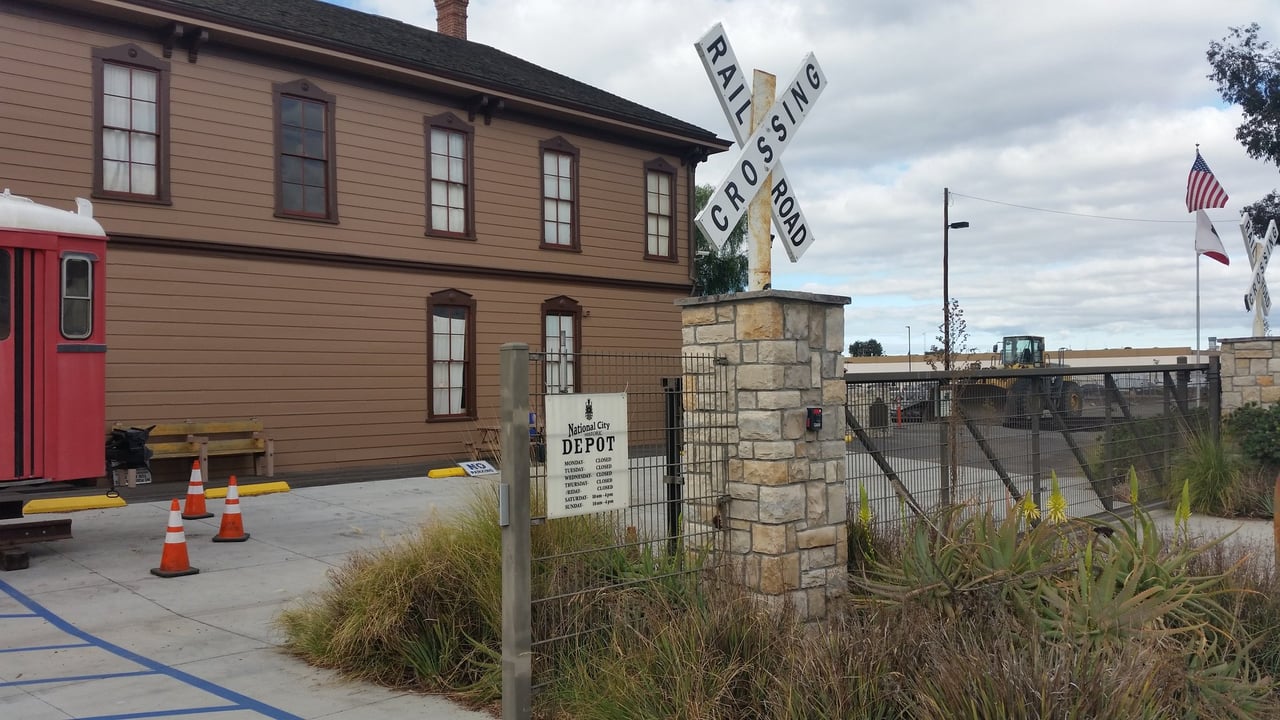
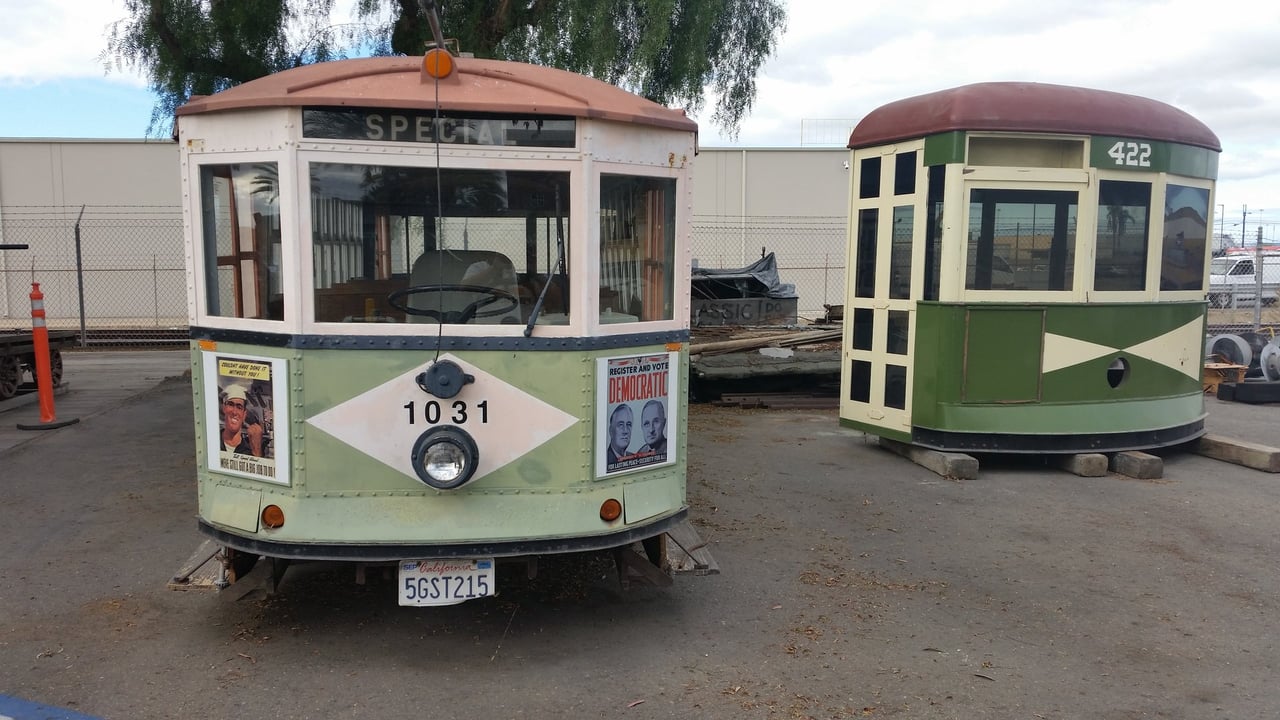
History is a weekend activity here. The 1882 depot at 922 West 23rd Street is California Historical Landmark 1023, the first Pacific Coast terminus of the Santa Fe system's transcontinental railroad, and the San Diego Electric Railway Association operates it as a museum open Saturdays and Sundays from 10 am to 4 pm. Granger Music Hall and Brick Row round out the National Register set. The Mile of Cars along National City Boulevard, which its association describes as nine family-owned dealerships representing more than 21 brands, is the city's best-known commercial strip; Plaza Bonita is the enclosed mall on the eastern edge. Check each facility's current hours and programs before you plan a routine around it.
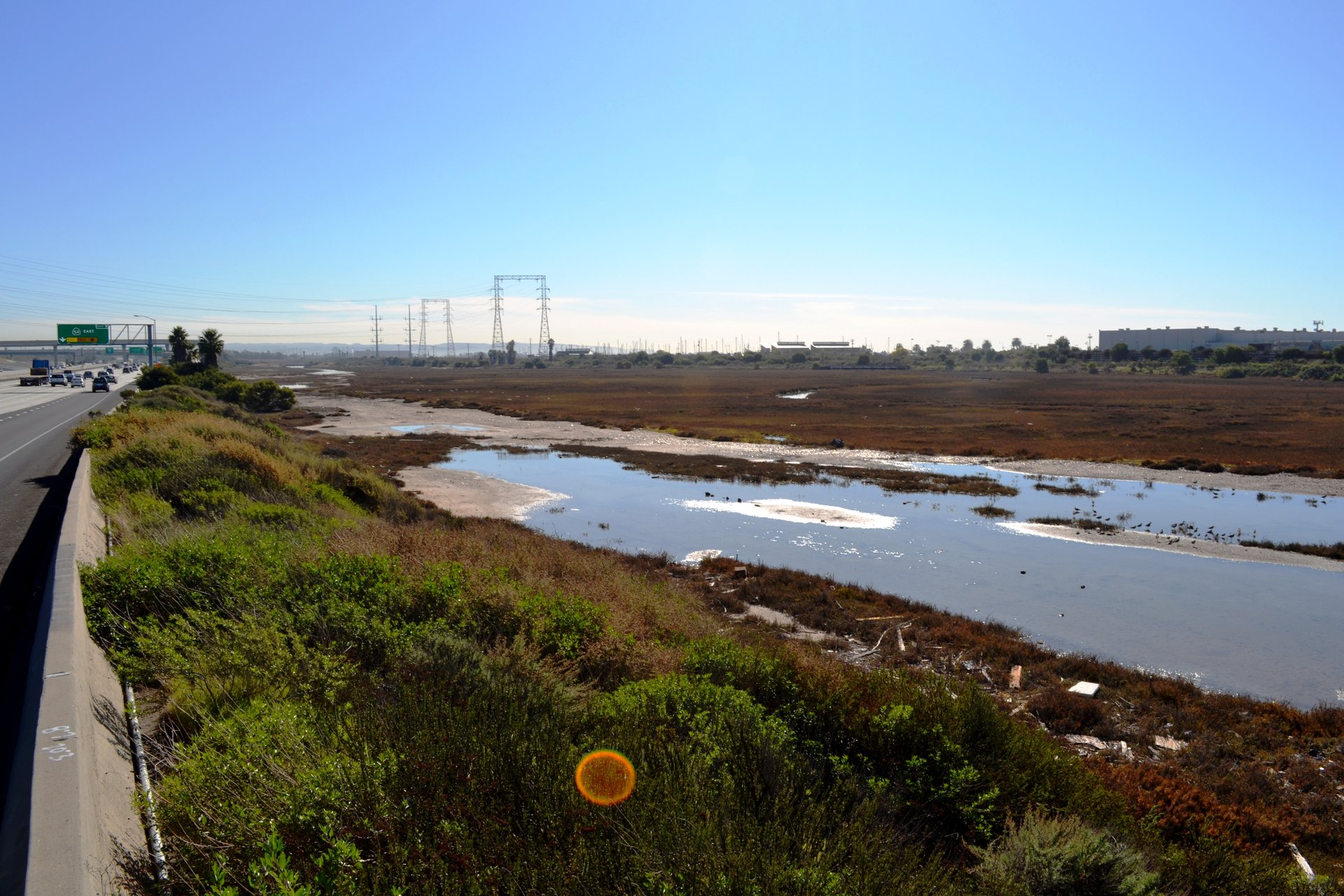
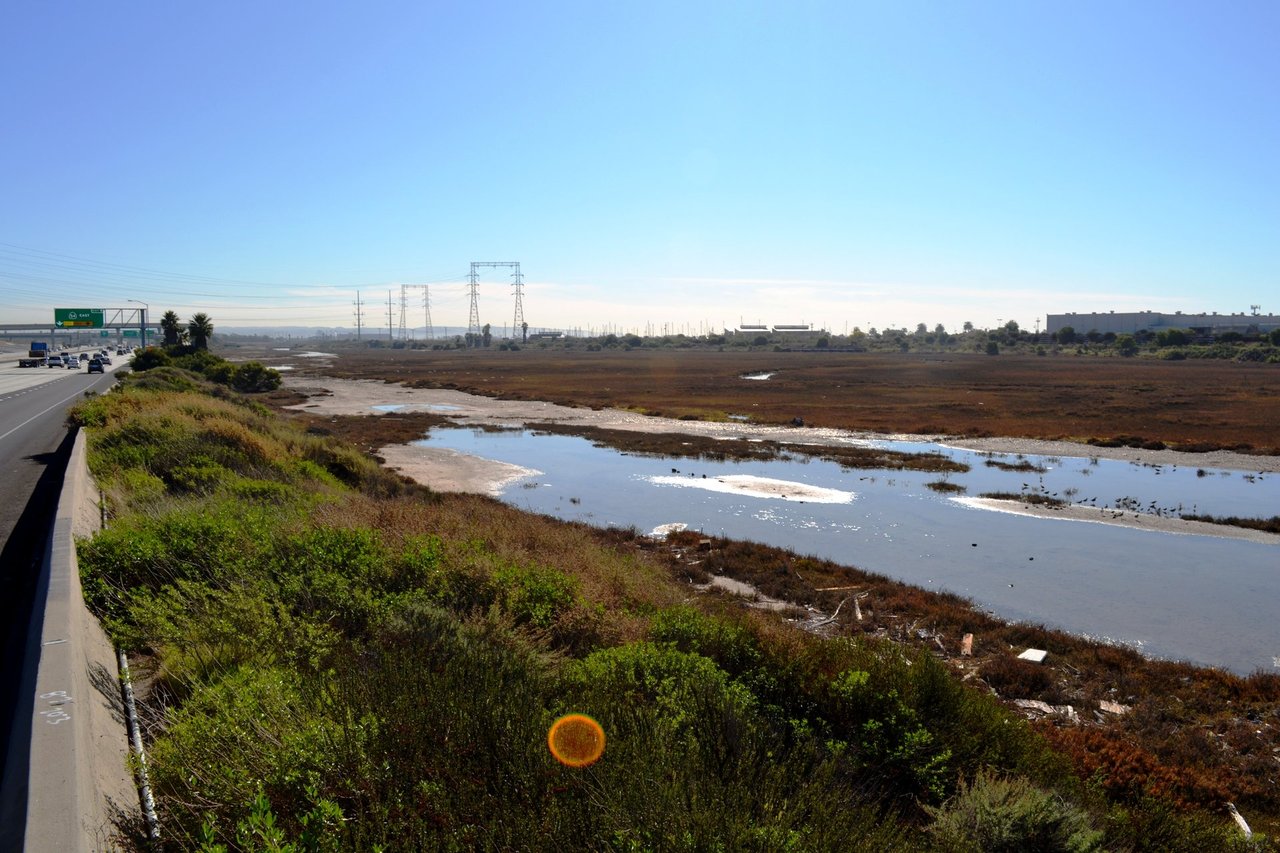
Paradise Marsh on the National City bayfront in December 2011, part of the Sweetwater Marsh unit of the San Diego Bay National Wildlife Refuge, seen from beside Interstate 5.
06 / Selling
A strong National City listing makes its most useful differences easy to verify. For a detached house on the central grid, that is usually the permit record, the condition of the roof, electrical and plumbing, a level and usable yard, off-street parking and any legal second unit. For a Westside cottage, it is the permit record plus the environmental history of the block. For a downtown condominium, it is the association's finances, the parking assignment and an honest account of the boulevard and the rail line. For a duplex or fourplex, it is the leases and the actual rents. Buyers here ask about additions, conversions and jurisdiction early; a seller who has the answers ready keeps the negotiation on price rather than on doubt.
Prepare the record before you ask buyers to decide. Gather permits, receipts for major work, warranties, association or park documents where relevant, any Mills Act contract, and the current tax bill with its special assessments itemized. Older houses should be presented with their age in mind, so have the inspection findings before the first showing and price the repairs you choose not to make. Prioritize the work by what the likely buyer will compare and by an actual budget; the home-value improvement guide and the seasonal maintenance list are starting points, while your property's inspection should set the final plan.
Timing and pricing should follow your segment, not the citywide median. In a ZIP where six detached homes closed in August 2026, one unusual sale can move the monthly figure; the year-to-date median and the days-on-market trend are steadier guides. Review the competing listings, the recent comparable closings and your home's condition together. Justin Tye and the team can organize that comparison, prepare the presentation and manage the path from inquiry through negotiation and closing. Begin with your address and your goals so the plan reflects the property you are actually selling.
Get your National City home value
Tell us about your property through our home-selling page. For an initial estimate, you can also use the home-valuation tool and follow up with an address-specific discussion.
07 / Why Justin
Our compiled team record documents 20 confirmed National City home sales, checked on September 14, 2026. That is historical team experience, not a claim that Justin personally represented every transaction or that the list measures citywide market share. Behind it sits the team's Southern California record of more than 13,500 team sales and a method that treats National City as its own market: the municipal boundary, the county island, the specific-plan district, the association documents and the rail line all change what a property is worth, and we read each of them before we talk about price.
Working with Justin Tye and the team begins with a clear brief: the housing form you want, your budget, the destinations that shape your week and the details that could change the decision. For a buyer, that means a focused search and a documented comparison of the actual closings that resemble the home you are considering. For a seller, it means preparation, presentation and pricing that buyers can verify. You can also review our sold-property portfolio. The table below shows the eight most recent eligible National City closings in our compiled record, with dates so the historical evidence remains clear.
Street | ZIP | Closed | Sold price | Represented |
|---|---|---|---|---|
23 E 1st Street | 91950 | Aug 2023 | $530,000 | Buyer |
801 National City Blvd #615 | 91950 | May 2023 | $315,000 | Buyer |
2006 J Ave | 91950 | Oct 2022 | $710,000 | Seller |
325 Harbison Ave | 91950 | Jul 2022 | $725,000 | Buyer |
1802 Via Las Palmas #38 | 91950 | May 2022 | $455,000 | Buyer |
2334 E Division St | 91950 | Apr 2022 | $650,000 | Seller |
1404 Coolidge Ave | 91950 | Jan 2022 | $560,000 | Buyer |
1905 Via Las Palmas #9 | 91950 | Jan 2022 | $415,000 | Seller |
Closings are from the team's compiled CRMLS record, deduplicated by date and address, with sides recorded as listed. They are historical evidence of experience, not current comparables for any property.
Call (949) 381-8581, send us a note about your National City plans, or browse National City homes and save your search. Justin Tye | CA DRE# 01728694.
08 / Questions
No. National City is an independent city that incorporated on September 17, 1887, the second-oldest in San Diego County according to its historic sites page. The Census Bureau's boundary gives it about 7.3 square miles of land plus 2 square miles of bay water, bordered by San Diego to the north and east, Chula Vista across the Sweetwater River to the south, and the bay to the west. The 91950 ZIP code also covers Lincoln Acres and some San Diego addresses, so confirm the jurisdiction of any address before comparing taxes, permits or services.
Redfin reported a median sale price of $735,513 for August 2026 across all home types, down 0.4 percent from a year earlier, in a report checked September 14, 2026. The Greater San Diego Association of REALTORS puts the ZIP 91950 detached median at $750,000 year to date through August 2026 and the attached median at $510,000, current as of September 5, 2026. Use those for orientation, then ask for comparable sales matched to your property type, block and condition before pricing an offer or a listing.
The National School District for preschool through sixth grade and the Sweetwater Union High School District for seventh grade onward. The elementary district runs ten schools inside the city, and Sweetwater Union's National City campuses are National City Middle School, Granger Junior High School and Sweetwater High School. Verify the assigned campus for a full street address through the National School District locator and Sweetwater Union's Find My School page, both linked in the schools section above.
Possibly, depending on where you work. The UC San Diego Blue Line stops at 8th Street station, with 123 parking spaces, and 24th Street station, with 156, per the MTS station parking page; both lots are for transit riders only. The line connects north to downtown San Diego and south to Chula Vista and the border, and MTS bus routes meet both stations. Test the walk from the home you are considering to the platform and the full trip at your actual hour before counting the trolley as a daily commute.
Special taxes are a parcel question. Most of the city was built long before Mello-Roos districts existed, but the only reliable answer is the current tax bill and the county's Mello-Roos information page for the exact parcel. The sales and use tax rate is 8.75 percent in National City and Chula Vista, one point above the 7.75 percent in the City of San Diego and Coronado, according to the state's rate table effective July 1, 2026. That affects what you spend in the city, not your property tax, and it is one reason the Mile of Cars matters to the city budget.
Lincoln Acres is an unincorporated San Diego County community that sits inside National City's outer boundary; the Census Bureau draws it as a hole in the city's polygon. A home there uses a National City mailing address but answers to the county for permits, code enforcement and most services, while its elementary school belongs to the National School District. Before you compare a Lincoln Acres lot with a city lot, confirm which government issues the permit you plan to need.
Often, but confirm the parcel. State accessory dwelling unit law applies, and the city's General Plan page records a 2024 Focused General Plan Update with a Transit Oriented Development Overlay and a Floor Area Ratio Density Bonus Program adopted to meet a regional housing need of 5,437 units for 2021 through 2029. Setbacks, utilities, parking and the review process are parcel specific; treat the possibility as something to confirm with the city's Planning Division, not a value you can price in from a listing remark.
The Port of San Diego's Balanced Plan, certified by the California Coastal Commission in December 2025 and accepted by the Port board on February 17, 2026, expands Pepper Park from 5.19 to 7.69 acres, realigns Marina Way, adds public access corridors and reserves a later phase for up to two hotels. The first phase of park improvements was completed in spring 2026, and the city's Bayshore Bikeway project is anticipated to begin in fall 2026. The tidelands remain Port and maritime land, so the plan changes amenities rather than adding homes.
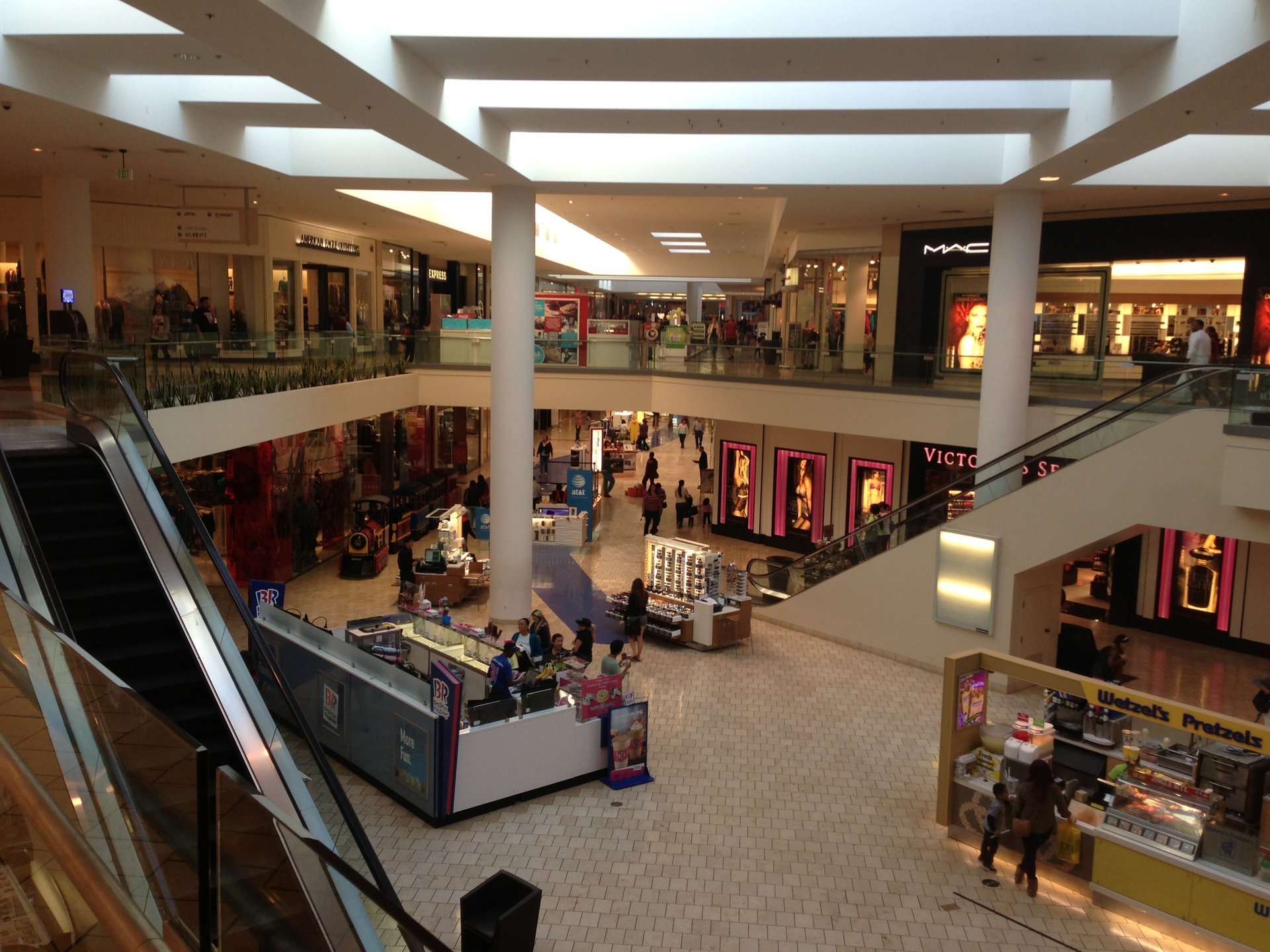
Inside Plaza Bonita in October 2013. The enclosed mall at 3030 Plaza Bonita Road anchors the city's eastern edge beside the Sweetwater River valley.
Get your National City home value
Compare the neighboring Chula Vista guide across the Sweetwater River, the Coronado guide across the bay, or the El Cajon, Escondido, Carlsbad and Del Mar guides for the rest of the county. Read the first-time buyer planning guide, run the numbers with the mortgage calculator, browse Justin's real estate articles, or use the National City home search. Connect with Justin Tye when you are ready to bring the comparison down to a specific address.
Prepared for JustinTye.com. Substantive research reviewed September 14, 2026. Market windows: Redfin, August 2026, all home types, checked September 14, 2026; Greater San Diego Association of REALTORS local market update for ZIP 91950, August 2026 and year to date, current as of September 5, 2026. Housing counts: California Department of Finance E-5, January 1, 2026 provisional estimate, released May 2026. Native provider-area data and nearby-school results above are separate from the sourced municipal and address-specific guidance in this article. Photographs identify places and context; they do not depict current listings.
Photography credits
National City Depot street entrance: RightCowLeftCoast, CC BY-SA 4.0. Brick Row on A Avenue: Wmoraga, CC BY-SA 3.0. Victorian house in the historic district: Der-wuppertaler, CC BY-SA 3.0. 24th Street trolley station: Antony-22, CC BY-SA 4.0. Paradise Marsh: U.S. Fish and Wildlife Service Pacific Southwest Region, public domain. Plaza Bonita interior: Der-wuppertaler, CC BY-SA 3.0. Paradise Valley Hospital West Wing: Worldbruce, CC BY-SA 4.0. Streetcars beside the National City Depot: RightCowLeftCoast, CC BY-SA 4.0. Images scaled to web size with their original aspect ratios; no scene content altered. Photographs do not depict current inventory or present conditions.













.jpg)


