344,553 people live in Anaheim, where the median age is 35.9 and the average individual income is $36,541. Data provided by the U.S. Census Bureau.
Total Population
Median Age
Population Density Population Density This is the number of people per square mile in a neighborhood.
Average individual Income
There's plenty to do around Anaheim, including shopping, dining, nightlife, parks, and more. Data provided by Walk Score and Yelp.
Explore popular things to do in the area, including Sweetsnpics, El Carrito Bar, and Malinche.
| Name | Category | Distance | Reviews |
Ratings by
Yelp
|
|---|---|---|---|---|
| Dining | 0.59 miles | 1 review | 5/5 stars | |
| Dining | 0.77 miles | 0 reviews | 0/5 stars | |
| Dining | 0.89 miles | 0 reviews | 0/5 stars | |
| Dining | 1.1 miles | 0 reviews | 0/5 stars | |
| Shopping | 0.96 miles | 0 reviews | 0/5 stars | |
| Active | 1.01 miles | 125 reviews | 4.7/5 stars | |
| Nightlife | 0.77 miles | 0 reviews | 0/5 stars | |
| Beauty | 0.86 miles | 0 reviews | 0/5 stars | |
| Beauty | 0.97 miles | 0 reviews | 0/5 stars | |
|
|
||||
|
|
||||
|
|
||||
|
|
||||
|
|
||||
|
|
Anaheim has 105,819 households, with an average household size of 3.2. Data provided by the U.S. Census Bureau. Here’s what the people living in Anaheim do for work — and how long it takes them to get there. Data provided by the U.S. Census Bureau. 344,553 people call Anaheim home. The population density is 6,854 and the largest age group is Data provided by the U.S. Census Bureau.
Total Population
Population Density Population Density This is the number of people per square mile in a neighborhood.
Median Age
Men vs Women
Population by Age Group
0-9 Years
10-17 Years
18-24 Years
25-64 Years
65-74 Years
75+ Years
Education Level
Total Households
Average Household Size
Average individual Income
Households with Children
With Children:
Without Children:
Marital Status
Blue vs White Collar Workers
Blue Collar:
White Collar:
At Anaheim's Packing House, the old citrus building opens into balconies, dining counters and shared tables. A few streets away, front porches and deep lots tell another part of the city's story. Continue toward ARTIC and the stadium district and the housing changes again, to attached homes and taller buildings. That variety is the useful starting point for an Anaheim home search: choose the part of the city that supports your ordinary week, then compare the homes within it.
Anaheim real estate includes historic houses in the Colony, established western neighborhoods, condos and townhomes around the Platinum Triangle, and hillside communities in the eastern part of the city. Redfin reports a $961,269 median sale price across all home types for the three months ending July 2026, using MLS and public-record calculations. That combined figure is a starting reference, not a valuation for a particular bungalow, condo or view home. The Anaheim market report and the comparisons below explain the difference.
Use the current listings above, then narrow the choices by ownership cost, building condition, school assignment and actual travel route. This guide covers the City of Anaheim, including Anaheim Hills. A mailing address alone is not proof of municipal jurisdiction. The native demographic and school panels are provider-area context; they do not replace a district's address check or establish the reporting period of an individual statistic.
Prepared by the Justin Tye Real Estate Group. Local sources and market context reviewed September 7, 2026. Photographs are dated in the captions.
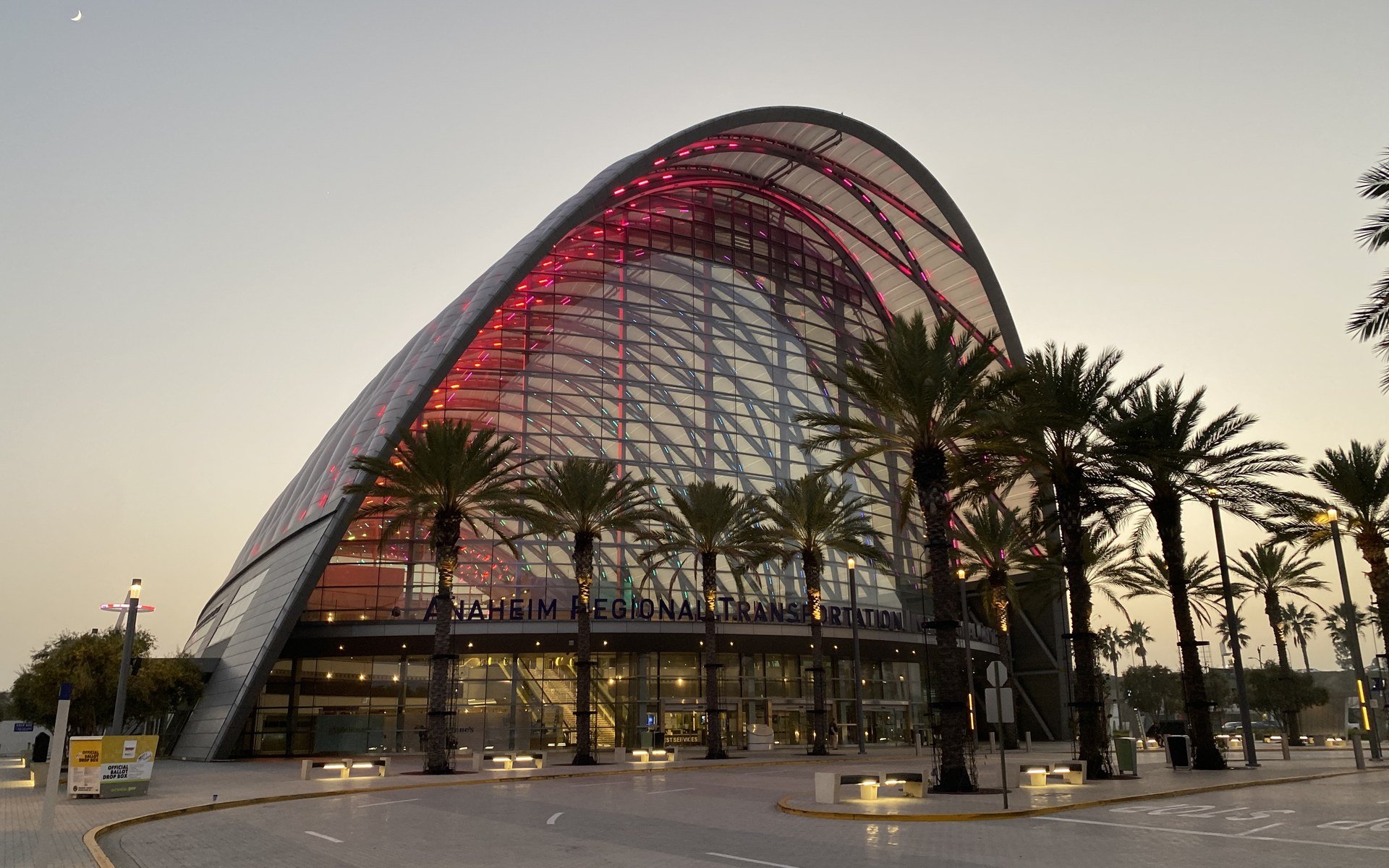
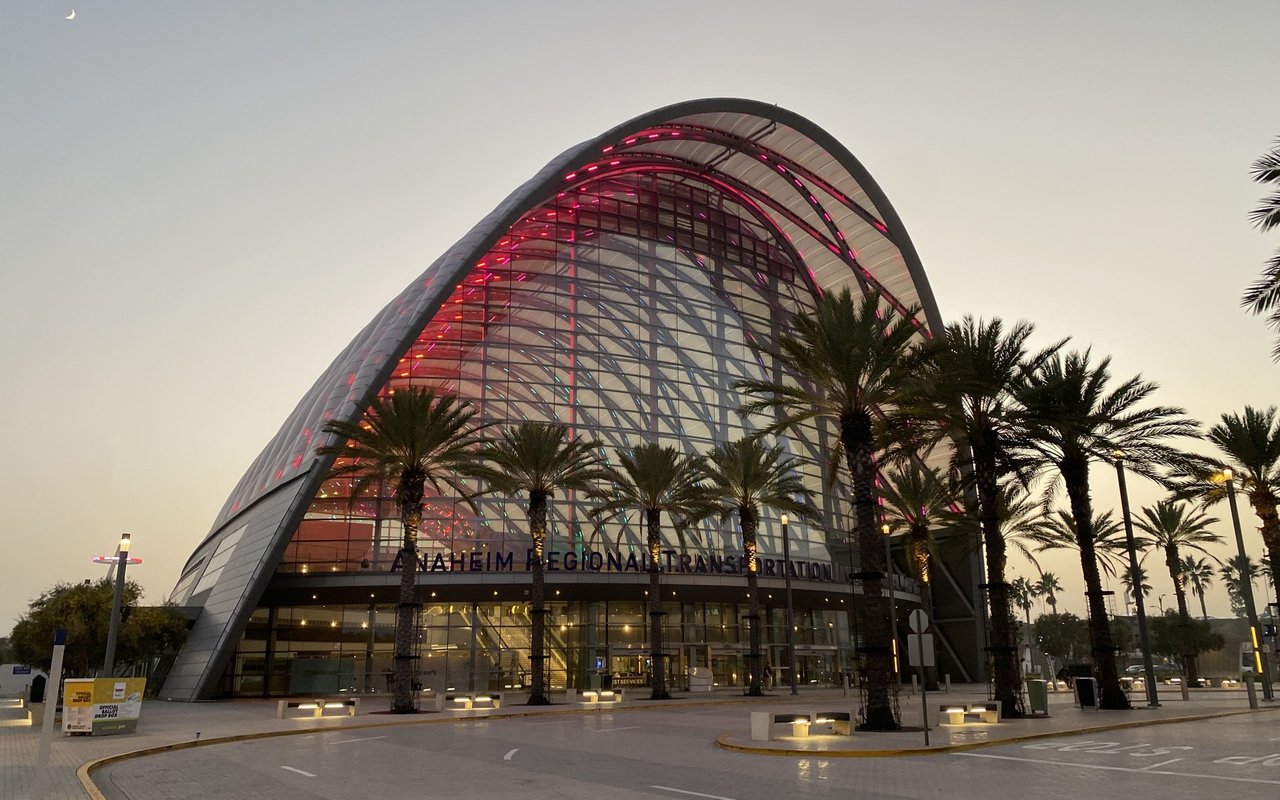
ARTIC's arched entrance, photographed in December 2024. The station is one of Anaheim's practical regional connections.
01 / The directory
Begin with housing form and location. A detached house with a yard, a historic home with preservation considerations, an attached property with shared maintenance, and a hillside address require different comparisons. These districts organize the search; individual streets, associations and properties still need their own review.
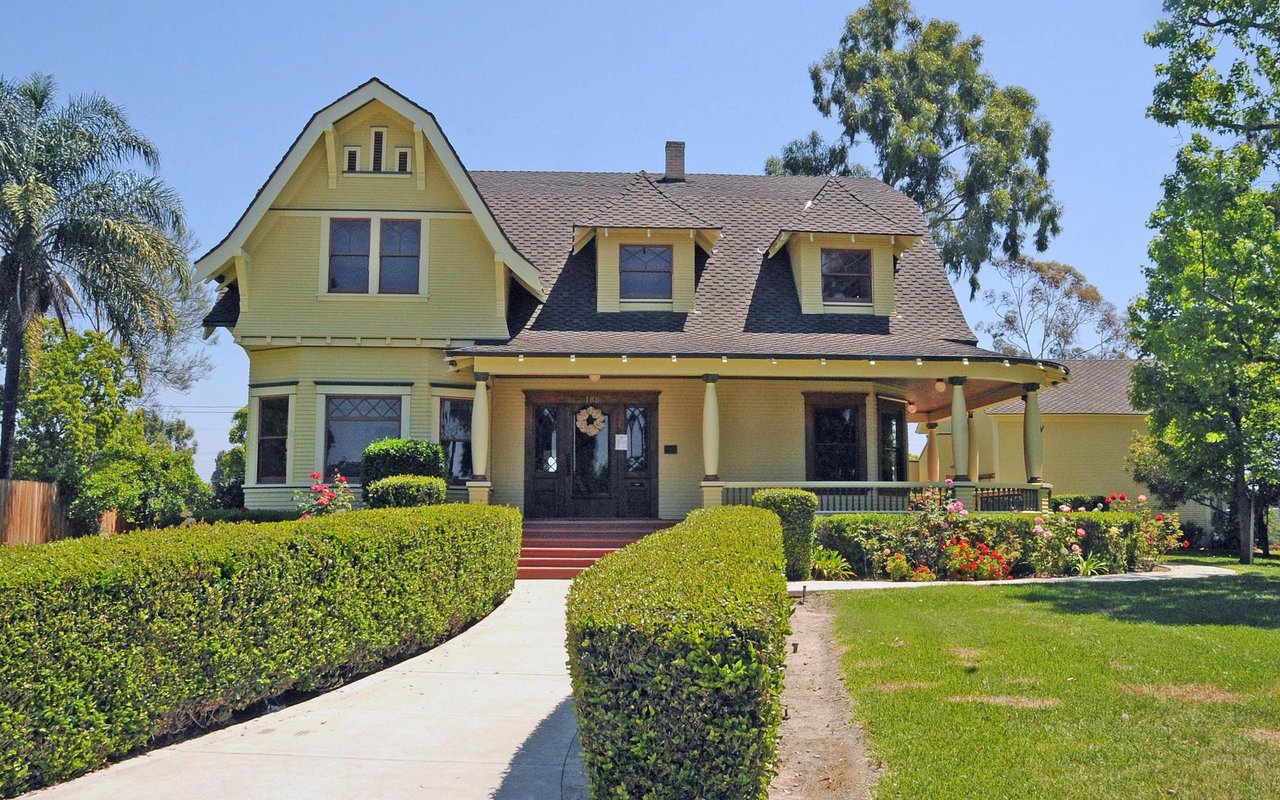
The Colony is the place to begin if older architecture and a relationship to the downtown streets matter to you. The city's historic-structure inventory describes the Anaheim Colony Historic District as a 1.8-square-mile area with more than 1,100 qualified structures, bounded by North, South, East and West Streets. It records the district's adoption in October 1997. Those are the city's published district and inventory figures, not a count of homes currently available.
Compare the particular house's layout, permitted work, original features and usable outdoor space. A larger-looking parcel can have a detached garage, alley access or an addition that changes how you use it. Walk the route to the shops and public spaces you expect to visit. A downtown address does not make every grocery trip convenient on foot, and a preserved exterior does not tell you the condition of plumbing, wiring or the foundation.
The city's historic-preservation guidance separates an identified historic property from a property under a Mills Act contract. Ask which classification applies, what approvals past work received, and what a future project would require. Buyers comparing historic streets elsewhere can also review Orange and Fullerton, keeping the same condition and renovation assumptions.
Western Anaheim offers established residential streets alongside major corridors such as Brookhurst Street, Euclid Street and Beach Boulevard. Detached homes, attached communities and manufactured-home parks can appear in the same broad search. Separate those ownership structures before comparing asking prices. With a manufactured home, clarify whether the land is included, what the space rent covers and what the park requires from an incoming owner.
For a detached home, focus on the actual floor plan, garage access, additions, outdoor space and repairs already completed. An attractive remodeled kitchen does not resolve an older roof or an undocumented conversion. If an additional dwelling is part of the plan, ask the city about that parcel before pricing future rent or a second household into the purchase. Compare similar homes in Buena Park, Cypress and Stanton without assuming their regulations or school boundaries are interchangeable.
Near the Resort, test the street on an ordinary workday and during an event period. Pay attention to the driveway, parking signs, visitor traffic and the route back from work. Proximity to Disneyland or the convention area may be useful for your schedule, but it does not establish permission to operate a vacation rental. Anaheim's current short-term rental program says entirely new short-term rentals remain prohibited.
The Platinum Triangle is Anaheim's urban comparison, centered on the stadium and arena area. The city's planning overview describes the transition from industrial uses toward mixed-use residential, office, retail and restaurant development. It also identifies a community facilities district for infrastructure. A planning designation or announced project is not proof that an amenity is complete, open, or included with a particular home.
For condos and townhomes, compare interior position, light, outdoor space, parking, stairs and elevator access as carefully as the bedroom count. Read the association budget, insurance information, reserve study and meeting records. Ask whether there are separate master and building associations, special assessments, rental restrictions or construction nearby. Evaluate the route to ARTIC on foot in person; a map's short distance can still involve major crossings. An attached home with predictable maintenance may suit your schedule, but the documents establish what the association actually maintains.
East Anaheim combines residential streets with the river corridor and the employment areas around Anaheim Canyon. The relevant comparison may be access to a workplace on La Palma Avenue, proximity to a particular school, or a route that avoids unnecessary freeway changes. Inspect the immediate surroundings of each home. A house near a commercial corridor and one deeper inside a residential tract can have quite different outdoor experiences despite sharing a ZIP code.
Anaheim Hills is part of Anaheim and has a separate guide for its hillside communities. Here, compare the usable portion of a lot, the position of a slope, drainage, access roads, association responsibilities and insurance availability. A broad view deserves a daylight visit from the actual rooms and yard. Confirm whether trees, adjoining property or future work could affect it; photographs do not create a protected view right.
For a wider North OC comparison, include Yorba Linda and Brea. Their names alone do not settle the choice. Put the same daily destinations, maintenance budget and home requirements next to each address, then see which tradeoffs you would accept over several years.
Ask which Anaheim neighborhood fits your budget, commute and school needs.
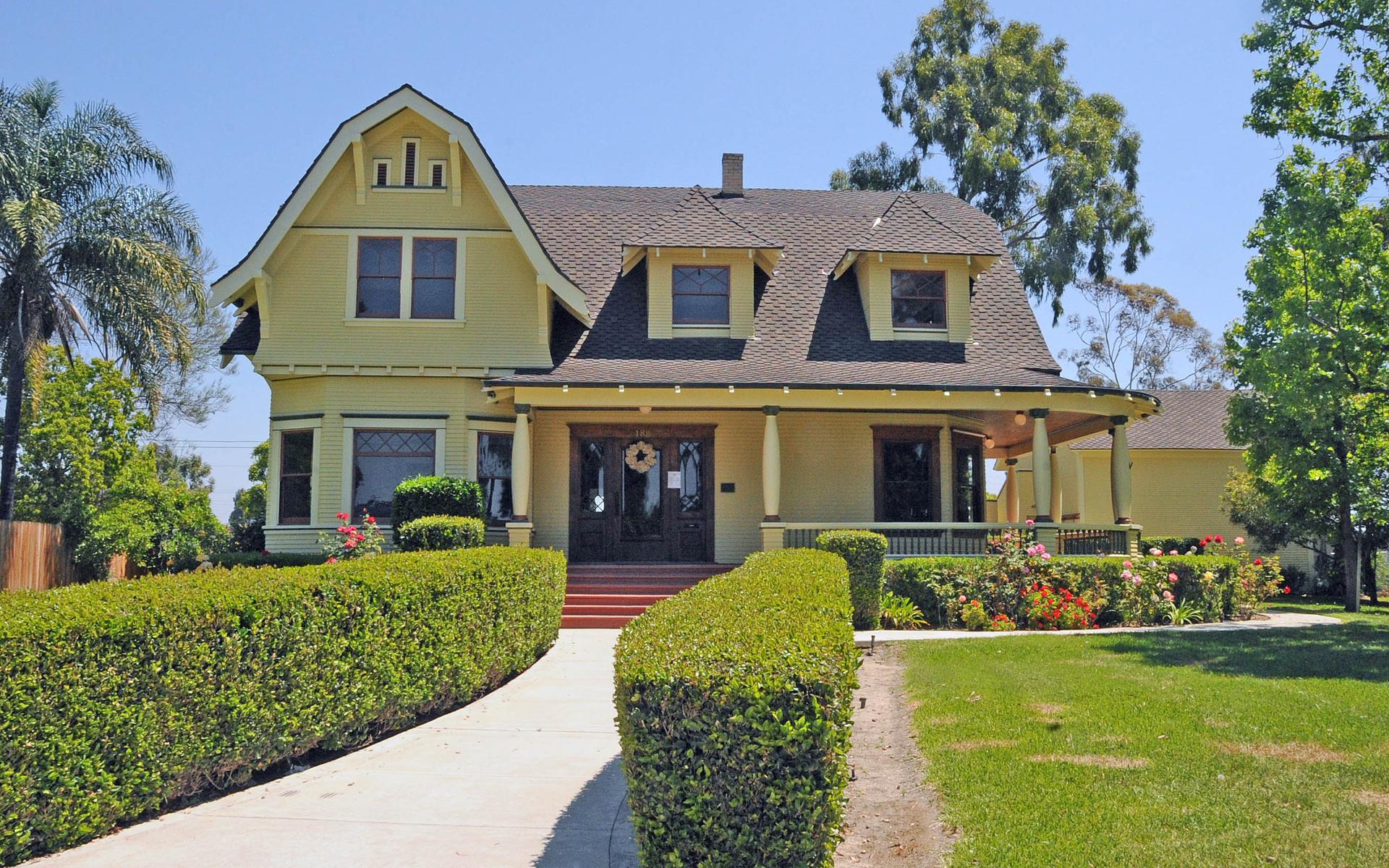
The Ferdinand Backs House in Anaheim, photographed in April 2020. Historic architecture is part of the downtown housing context; this photograph is not a current listing.
02 / Prices
Anaheim's citywide median combines properties with different land, maintenance and financing arrangements. Redfin's all-home-type report for the three months ending July 2026 shows a median sale price of $961,269, up 6.8% from the comparable year-earlier period, and 39 median days on market. The publisher bases its calculations on MLS and public records. These are market context, not the expected price or marketing time for every Anaheim home.
For a buying decision, build the comparable set around the property's location, ownership type, size, condition and utility. Then review recent closed sales alongside competing active and pending inventory. A manufactured home with leased land, a condo and a detached house should not be treated as substitutes merely because they have the same number of bedrooms. Likewise, a remodeled home and an original-condition home need a realistic repair comparison.
Area or choice | Home types to compare | Association questions | Tax and cost checks | Value considerations |
|---|---|---|---|---|
Colony and downtown | Historic houses, cottages and newer infill | Confirm the property's actual association status | Recorded Mills Act contract, tax bill, restoration budget | Historic features, permits, systems and usable lot |
West Anaheim | Detached houses and attached communities | Review dues and responsibilities where applicable | Property taxes, repairs, utilities and insurance | Layout, additions, parking and location within the block |
Manufactured-home parks | Home and land tenure, reviewed separately | Park approval, rules and included services | Space rent, increases, financing and other charges | Ownership terms and long-term monthly cost |
Platinum Triangle | Condos and townhomes | Master/building dues, reserves and assessments | Parcel-specific CFD or special taxes, insurance | Parking, light, building position and nearby construction |
East Anaheim and Hills | Detached, attached and hillside properties | Slope, landscape and common-area responsibility | Insurance quotes, maintenance and actual tax bill | Lot utility, access, view position and drainage |
This comparison identifies questions to verify, not universal fee or tax classifications. The city's Platinum Triangle page confirms a CFD exists; it does not establish the charge for every property. Obtain the actual secured tax bill and association documents. Estimate mortgage principal and interest, taxes, insurance, dues or space rent, utilities and a maintenance allowance together, so the purchase price does not hide a different monthly commitment.
Anaheim's Mills Act contract has a ten-year term that renews annually, according to the city's preservation FAQ, reviewed September 7, 2026. A qualifying contract can affect property taxation and carries preservation obligations. Do not assume eligibility, a fixed savings percentage or an automatic benefit from the words historic home. Review the recorded agreement, condition requirements and property-specific assessment with the responsible city and county offices.
Ask for the actual comparable sales for your Anaheim home or target neighborhood.
03 / Schools
Anaheim does not have one school district for every address and grade. Identify both the elementary and secondary assignment for the home you are considering, then confirm them with the district. The native school table above includes schools within or near the provider area; distance and a displayed rating do not establish attendance eligibility.
The Anaheim Union High School District Find My School tool provides address-based junior and senior high-school results for its service area. For eastern addresses, use Orange Unified's school locator. Other elementary and unified district boundaries also touch Anaheim, so neither tool should be treated as a citywide assignment guarantee. The city's elementary district boundary map helps identify the responsible district before you contact it.
Ask about the grade you need for the enrollment year you expect, not only the current listing's school names. Confirm capacity, any transfer process and whether a specialized program has a separate application. A seller's current school arrangement may reflect a transfer or a program admission that does not follow the property. Save the district's response with your home-search notes.
Then test the school trip alongside the rest of the week. Walk or drive the route at the relevant time, note major crossings, and check before- or after-school arrangements directly. Compare curriculum, services, activities and transportation using your own priorities. A single numerical rating cannot answer those questions, and buying a home cannot guarantee an admission or future program offering.
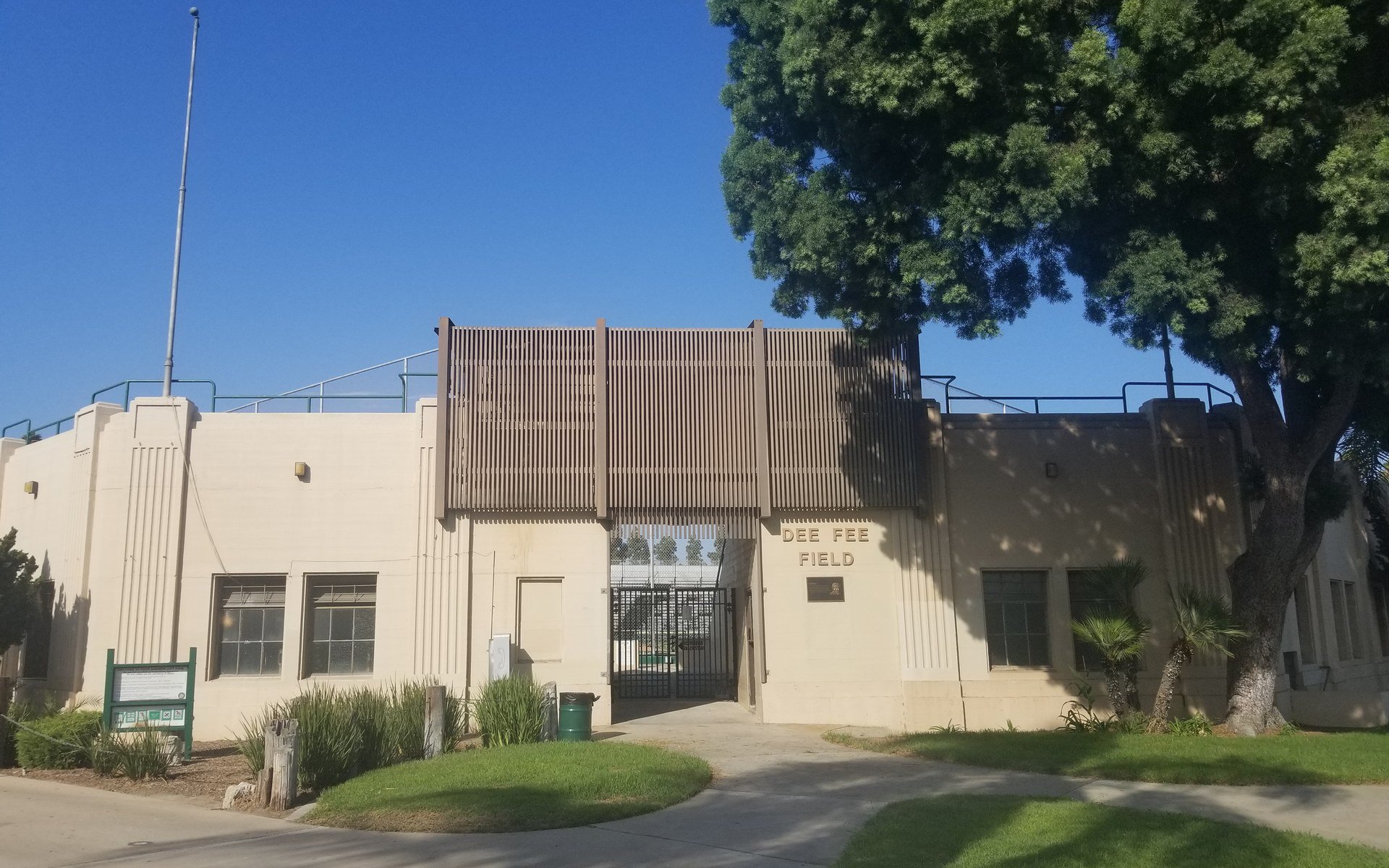
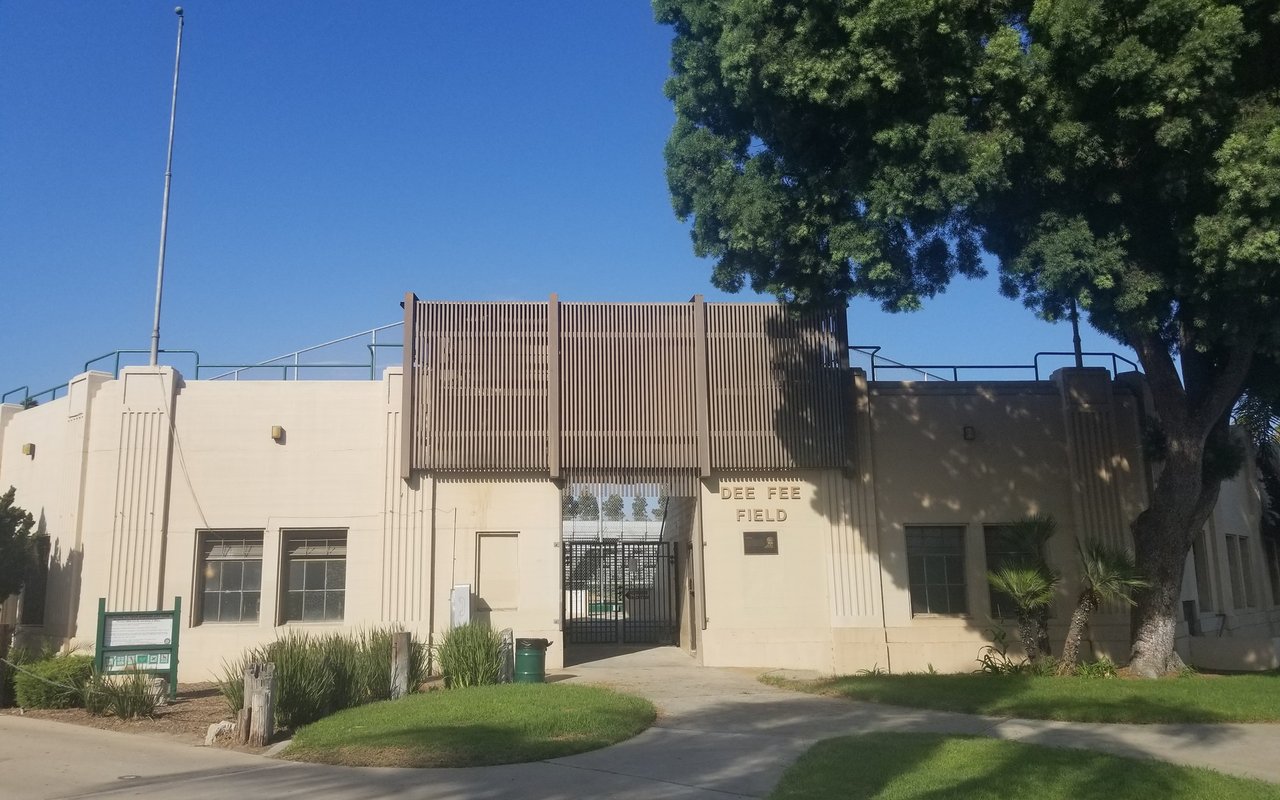
Dee Fee Field in Anaheim, photographed in September 2019. Recreation facilities are a separate part of the local routine from school attendance boundaries.
04 / Commute
Choose the address against the trips you actually make. Anaheim's freeway, rail and arterial options can serve different directions, but a city label does not predict a door-to-door commute. Compare the first and last parts of the trip, your departure window, transfers and parking. Test a second route before assuming that proximity to a freeway interchange makes the whole journey simple.
The I-5, SR-91 and SR-57 corridors are central to many Anaheim trips. The relevant entrance, direction and freeway change depend on whether the home is in the western neighborhoods, downtown, the stadium area or the hills. Event schedules around the Resort, Angel Stadium and Honda Center can change nearby access. Check the route on days that resemble your routine, including the return trip, rather than relying on an off-peak estimate.
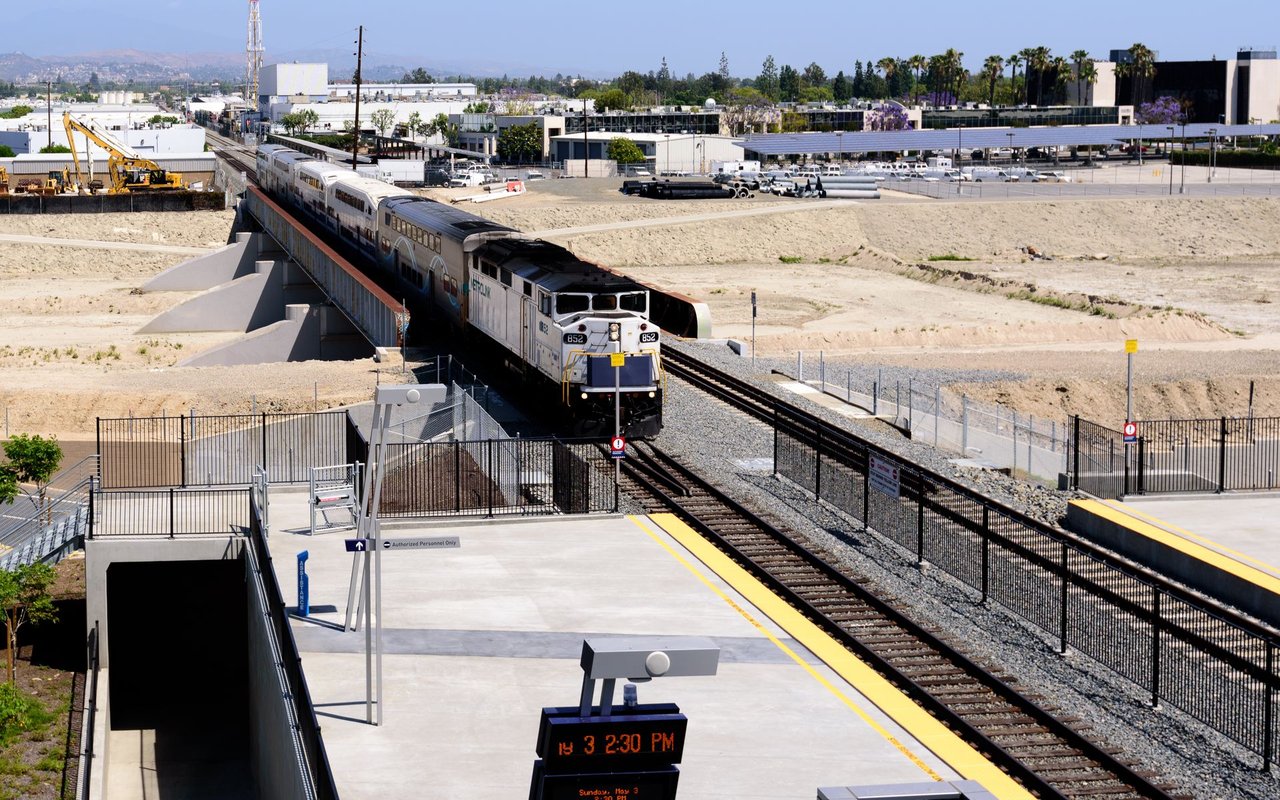
Anaheim ARTIC is Metrolink's Orange County Line station and also connects with Amtrak Pacific Surfliner service. Anaheim Canyon is a separate station on the Inland Empire-Orange County Line. Check the operator's current timetable, service alerts, fare rules and station information before treating either as a commuting solution. The stations are not interchangeable, and this guide makes no fixed travel-time promise.
For an occasional Los Angeles trip, compare rail with driving based on your final destination and return time. For Irvine employment or airport travel, include the distance from home to the relevant freeway or station and from the arrival point to the office or terminal. If rail only covers part of the journey, budget the transfer and last-mile leg. Buyers with several weekly destinations may benefit more from a balanced route plan than from optimizing one trip.
05 / Daily life
A useful neighborhood comparison includes the places you would visit without making a special outing of it. Downtown's Packing House and Center Street area offer a different routine from a western residential block or a hillside address. Try the grocery run, a park visit and the evening return home before deciding what convenient means for your household.
Anaheim Coves provides a concrete way to compare access to outdoor space. The City of Anaheim describes the completed park as 26 acres with a 2.5-mile accessible multi-use trail system along the Santa Ana River, in its facility record reviewed September 7, 2026. Check the entrance closest to the property, available parking and the route from the front door. A nearby trail on a map may have its usable entrance on another street.
In Anaheim Hills, the city describes Oak Canyon Nature Center as a 58-acre park with four miles of hiking trails across three adjoining canyons. That is the facility operator's description, checked September 7, 2026. Review current hours, trail conditions and program information before visiting. It is a local hiking resource, not evidence that every hillside home has direct trail access.
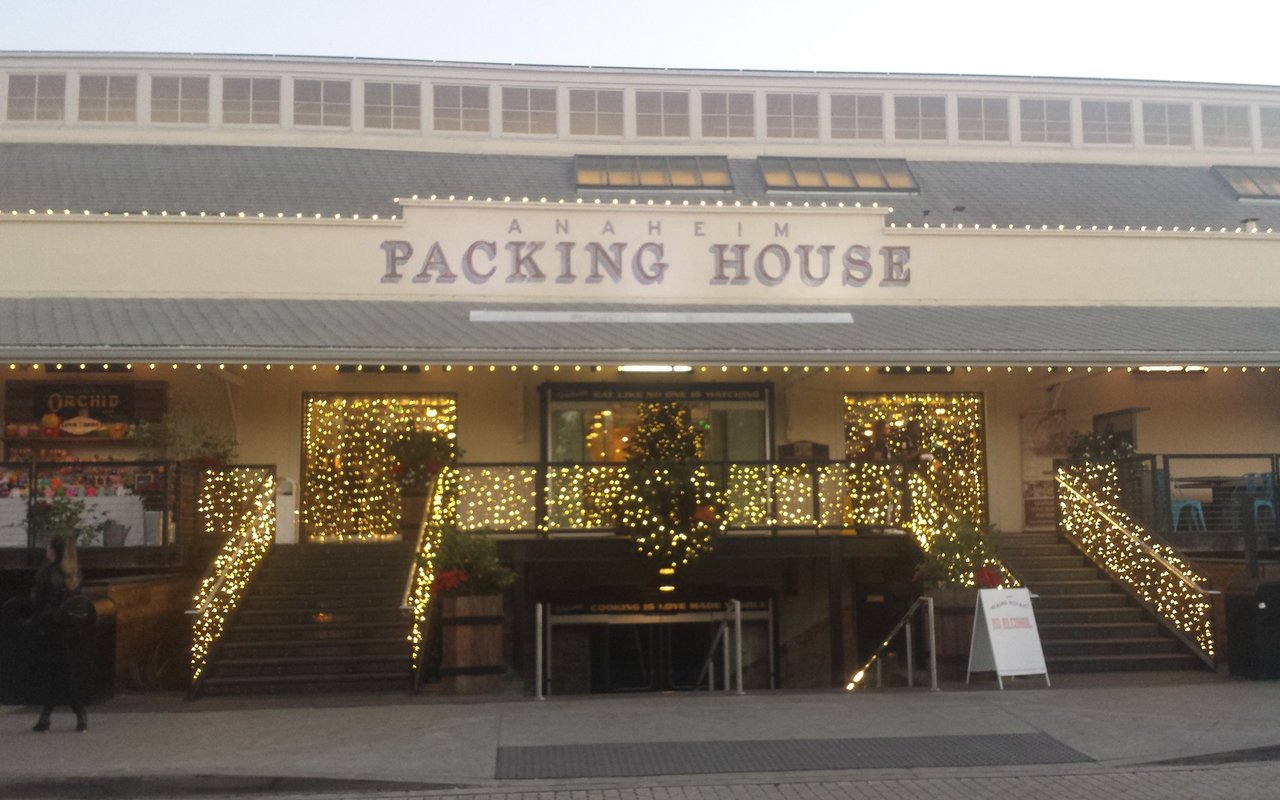
The Packing House is a useful downtown dining anchor, while the wider city includes established commercial streets and recreation facilities. Business tenants, programs and opening hours change; the photographs here show the places on their stated dates. Use the city parks and facilities directory for current recreation details, and confirm dining plans with the venue. A location can be appealing while still requiring a car for most errands.
Compare nearby cities if the desired routine is easier across a boundary. Garden Grove is a relevant southern comparison; La Palma and La Habra add western and northern alternatives. Keep the same criteria: the home itself, actual ownership cost, the daily destinations and the tradeoffs on the street.

Inside Anaheim Packing House in June 2014. The photograph documents the space; current food vendors and hours should be checked directly.
06 / Selling
Anaheim sellers benefit from a clear comparison set. A Colony house should be presented with its documented character, condition and permitted improvements. A western detached home needs an honest explanation of the layout, lot, garage and major systems. An attached home needs association information that allows a buyer to understand the full cost. A hillside listing needs useful views of the actual property, together with access, slope and insurance information.
Prepare the evidence before choosing the launch price. Gather improvement records, permits, warranties, tax information and association materials where relevant. Decide which repairs will improve the buyer's understanding and which should be disclosed and reflected in pricing. The most photogenic renovation is not automatically the best use of the preparation budget. Work backward from competing homes and likely inspection questions, rather than adding finishes without a market reason.
We can help you build the comparable set, plan presentation and marketing, organize showing access and evaluate offer terms. Review price, financing, contingencies, timing and any concessions together. The goal is a well-supported decision through closing, with a plan matched to the property. Neither a citywide median nor a prior team's sale guarantees the result for the next listing.
Start with our home-selling process to discuss the address, comparable sales and a practical preparation plan.
07 / Why Justin
The team's city ledger records 117 confirmed Anaheim home sales, checked September 7, 2026. This is a historical team record, with Anaheim Hills carried separately in the city ledger. It is not an all-market sales total, a market-share calculation or a claim that Justin personally represented every transaction. The table below shows the eight latest eligible, distinct Anaheim closings in the supplied combined ledger.
The local value of that record is the ability to discuss different property and ownership situations with evidence. We will compare your target home with relevant recent sales, examine carrying costs and help identify questions for the inspector, association, lender or city. Justin Tye holds CA DRE# 01728694; Active Realty, Inc. holds DRE# 02022092. Talk through your timeline and the specific property so the next step is useful.
Street | ZIP | Closed | Sold price | Represented |
|---|---|---|---|---|
2789 W Pepper Tree Dr | 92801 | Nov 2024 | $679,000 | Buyer |
3576 W Savanna St | 92804 | Oct 2024 | $697,000 | Buyer |
2571 W Crescent Ave | 92801 | Sep 2024 | $780,000 | Buyer |
1869 S Norma Ln | 92802 | May 2024 | $1,195,000 | Seller |
1801 E Katella Ave APT 2003 | 92805 | Mar 2024 | $465,000 | Buyer |
2770 W Lincoln Ave Spc 52 | 92801 | Mar 2024 | $180,000 | Seller |
4000 E Flintlock Way #87 | 92807 | Feb 2024 | $650,000 | Seller |
5815 E La Palma Ave Space 185 | 92807 | Feb 2024 | $248,888 | Buyer |
Historical team transactions, not current market comparables. Latest eight qualifying Anaheim rows, deduplicated by address and closing date; Buyer, List and Both sides included, Other excluded. List is displayed as Seller. Prices span different property types, including manufactured homes. Source: supplied team closed-deals ledger, checked September 7, 2026.
Call (949) 381-8581, send a note about your Anaheim real estate plans, or search Anaheim homes and save your search.
08 / Questions
Redfin reports a $961,269 all-home-type median for the three months ending July 2026. Its city market report combines MLS and public-record data. Use a separate comparable set for the home's district, property type, condition and land ownership before making an offer or choosing a listing price.
No. Anaheim Hills is part of Anaheim. It deserves its own housing comparison because terrain, associations, access and property maintenance can differ from other parts of the city. Our Anaheim Hills guide complements this city guide. Confirm the actual parcel's jurisdiction when a listing uses a broad neighborhood or mailing label.
Do not base the purchase on that assumption. The city's current program page, checked September 7, 2026, says entirely new short-term rentals remain prohibited. Existing permitted operations are subject to separate rules. Have the city verify the specific property's status and any transfer requirements before relying on advertised rental income.
No. Historic appearance or inventory status does not establish a Mills Act contract or a particular tax reduction. Review the recorded contract, current obligations and assessment. The city's preservation FAQ explains eligibility and the program. Evaluate maintenance obligations alongside any verified tax effect.
The answer depends on the property. Review association documents, any master association and the actual tax bill. The city identifies a CFD in its Platinum Triangle planning information, but that does not establish a charge at every address. For manufactured homes, check land tenure and space rent separately.
Use the responsible district's current address locator and confirm the result for the required grade and enrollment year. Start with AUHSD or Orange Unified when applicable, and identify the elementary district independently. Nearby schools and a seller's current enrollment do not establish the buyer's assignment.
ARTIC and Anaheim Canyon serve different Metrolink lines. Review the ARTIC station information and Anaheim Canyon station information, then compare your destination, departure and return services. Include travel to the station and the final leg, not only time on the train.
Bring the address, improvement history, known condition issues, tax and association information, and your preferred timeline. Photos and permit records help distinguish a cosmetic update from a documented improvement. Start with the valuation page or contact us for a comparison grounded in the property's actual features and competing inventory.
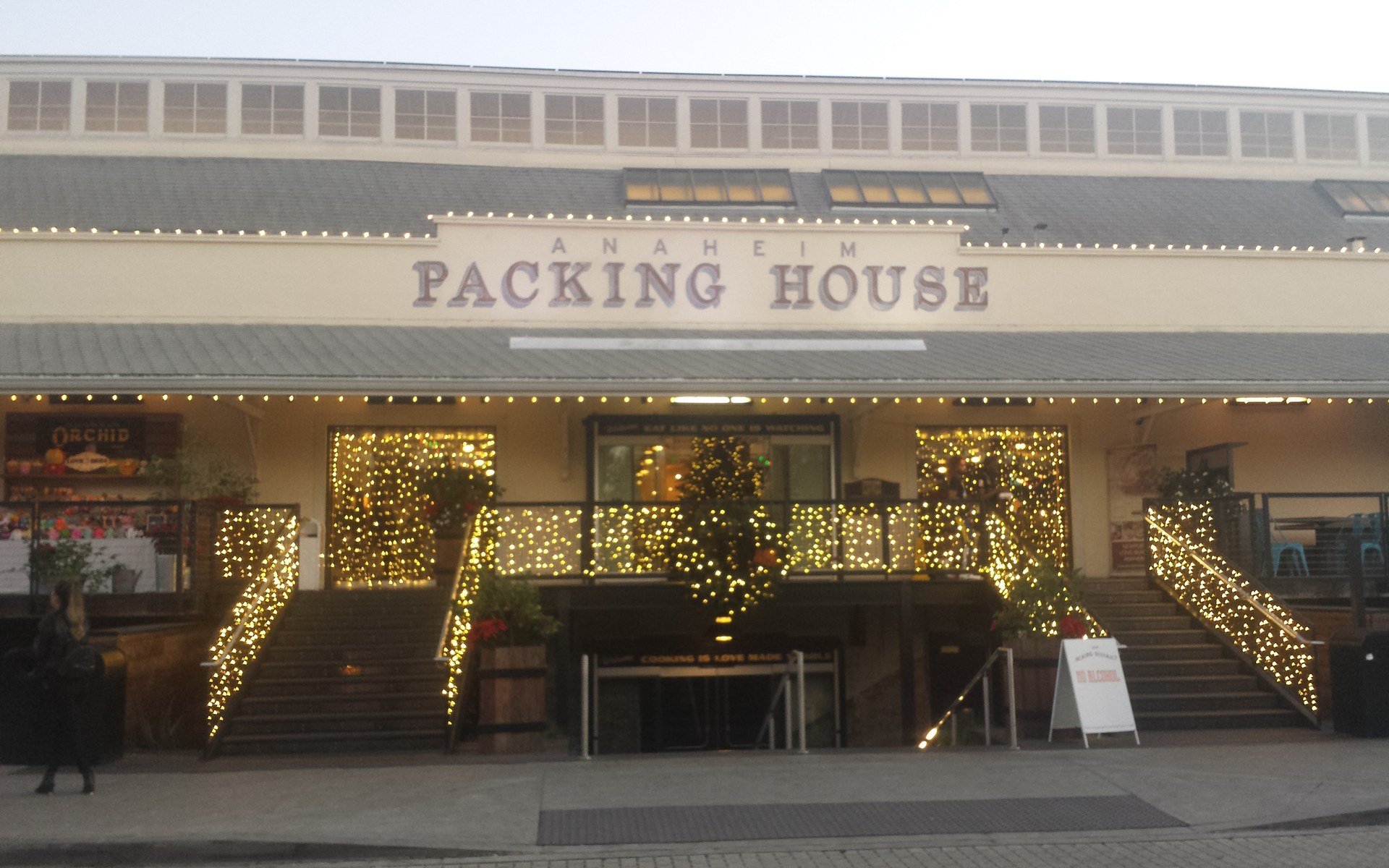
The Anaheim Packing House exterior in December 2019, shown with seasonal decorations.
Continue with the Orange County guide, compare nearby Fullerton, Garden Grove and Buena Park, explore the neighborhood directory, or read our real estate articles. Bring the property and your priorities into the conversation when you are ready to narrow the search.
Photo credits, in gallery order: ARTIC illuminated arched facade in Anaheim by EEJCC, CC0 1.0; Ferdinand Backs House with landscaped front garden in Anaheim by Jerrye and Roy Klotz, M.D., CC BY-SA 4.0; Dee Fee Field entrance and trees in Anaheim by Spatms, CC BY-SA 4.0; Interior balconies and dining spaces at Anaheim Packing House by Mike Alcoran, CC BY 2.0; Anaheim Packing House exterior decorated for the holidays by Rotideypoc41352, CC BY-SA 4.0; Metrolink train and platforms at Anaheim ARTIC by Jay Stewart, CC BY-SA 2.0. Photographs cropped to 16:10, resized and compressed; adapted images retain their respective licenses. Images show their captioned dates and do not imply current property availability.